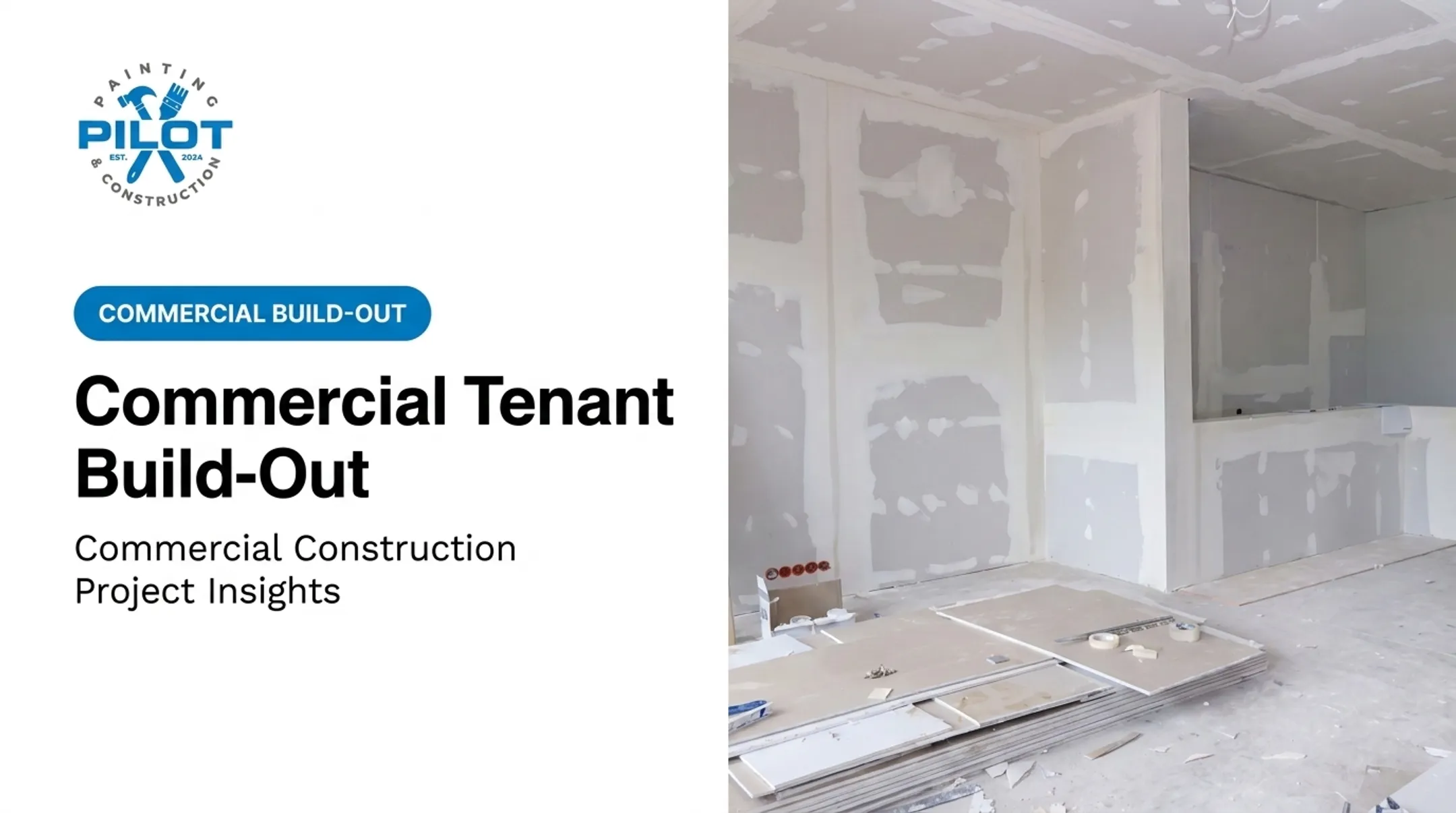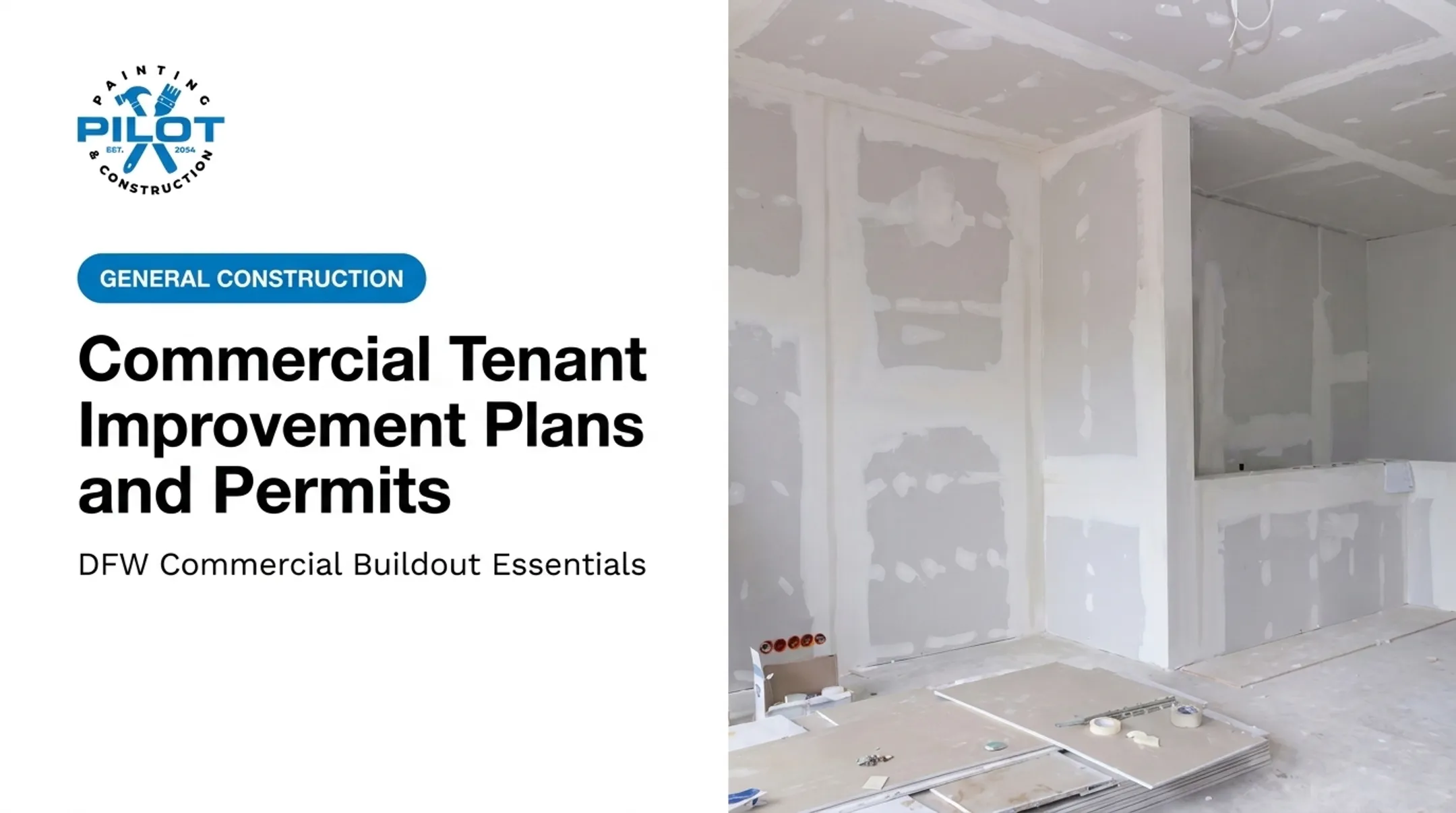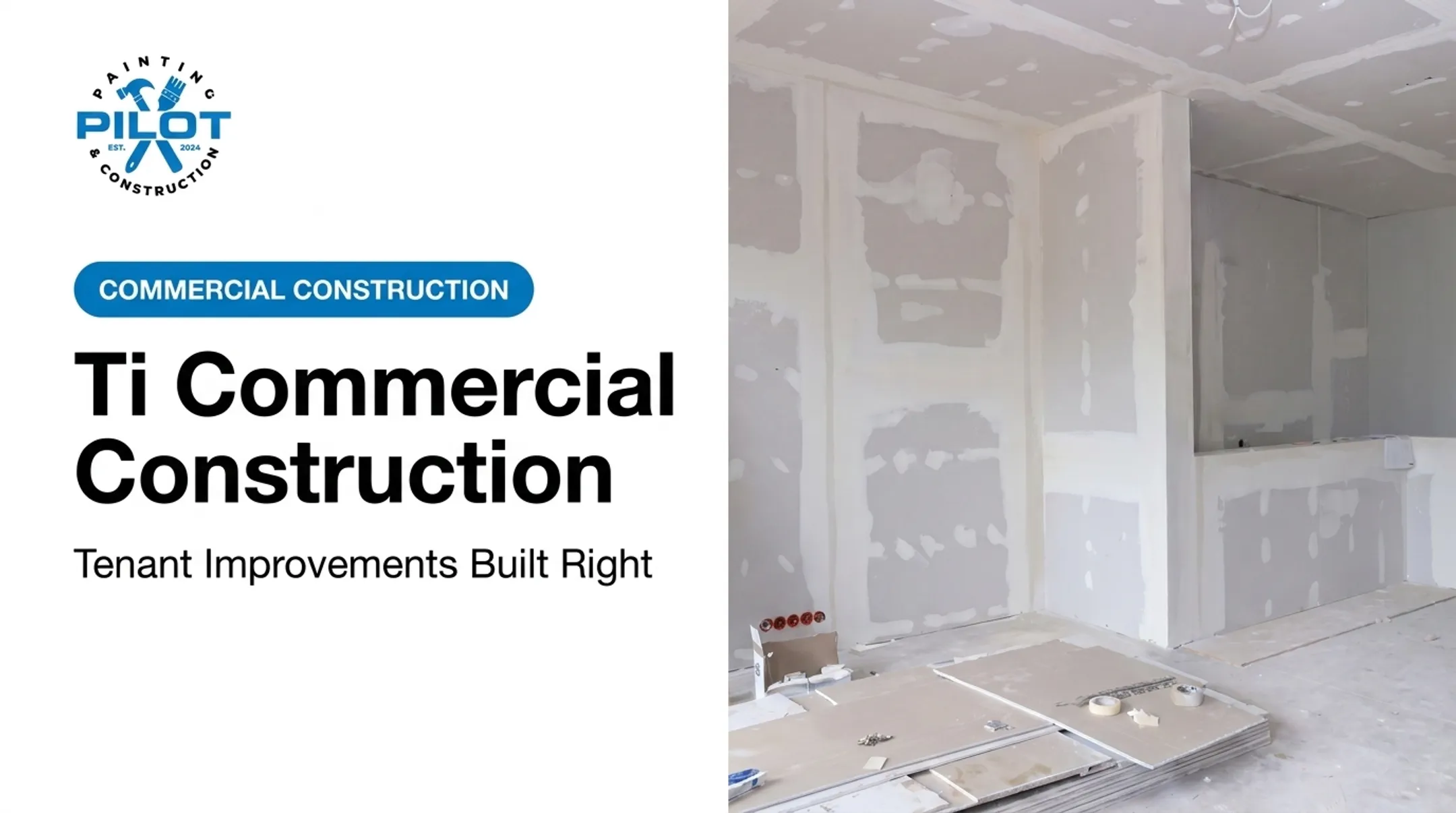

Tenant improvements (TI) affect your budget, your move-in timeline, and how functional your space actually is. This matters whether you're opening a restaurant, outfitting an office, or building out a retail storefront across North Texas.
This guide covers what qualifies as TI, what a Tenant Improvement Allowance (TIA) actually pays for, how depreciation works, and how Pilot Painting & Construction supports commercial tenants through the buildout process.
Key Takeaways
- TI build-outs adapt a leased space to one tenant's operations, layout, and brand needs.
- Negotiate a Tenant Improvement Allowance (TIA) up front—it's landlord-funded and usually set per square foot.
- Leave furniture, decor, and movable items off the TI list; they rarely qualify and hit your own budget.
- Plan for lease-end reality: most permanent improvements revert to the landlord, with tax depreciation along the way.
- Engage a local contractor early to strengthen negotiations and protect your build-out budget.
What Is a Tenant Improvement?
A tenant improvement (also called a leasehold improvement) is a modification made to a leased space to configure it for a specific tenant's operational needs. According to Cushman & Wakefield, typical TI work includes walls, ceilings, interior layout changes, electrical systems, lighting, flooring, and paint — the fixtures and finishes that turn a shell space into a working business.
To qualify as TI, the work must:
- Benefit a specific tenant (not the whole building)
- Become a permanent or semi-permanent fixture
- Have a long-term useful life
- Revert to the landlord's ownership at lease end
TI vs. Building Improvements
Building improvements — a new roof, elevator upgrades, lobby renovations — benefit every tenant in the property and are the landlord's responsibility to fund and maintain. TI, by contrast, is specific to your suite and your business. Mixing up the two during lease negotiations often sparks disputes over who pays for what.
TI applies across property types. Offices, retail stores, restaurants, and industrial spaces all typically need some level of buildout before move-in.
For tenants, TI decides whether a space works for daily operations, reflects brand identity, and meets code and ADA requirements. For landlords, a well-planned tenant improvement allowance supports retention and protects long-term property value.
Examples of Tenant Improvements: What's Included and Excluded
Not every upgrade you want counts as a tenant improvement. Scoping your project accurately upfront avoids budget surprises later.
| Typically Included | Typically Excluded |
|---|---|
| Flooring and carpet | Furniture and decor |
| Lighting fixtures | Signage |
| Wall and partition changes | IT/data cabling (lease-dependent) |
| HVAC and plumbing upgrades | Moving expenses |
| Interior painting | Outdoor/exterior upgrades |
| ADA accessibility work | Unattached equipment |
| Ceiling work | — |

Cushman & Wakefield notes that connectivity and workstation wiring are sometimes covered under TI, while unattached furniture, fixtures, and equipment (FF&E) are typically excluded. There's no universal rule for signage or data cabling — it depends entirely on your lease and work letter.
Among the upgrades that usually qualify, painting and finish work is one of the most common and cost-effective TI categories businesses request. It's relatively fast, transforms a space visually, and works for offices, restaurants, and retail alike without the disruption of structural changes.
Tenant Improvement Allowances: How They Work and Who Pays
A Tenant Improvement Allowance (TIA) is a pre-negotiated sum the landlord contributes toward your buildout costs, typically expressed per square foot (Cushman & Wakefield).
CBRE office market data shows how these allowances shift year to year:
- H1 2024: $94.69/SF, down nearly 3% from 2023's $97.55/SF
- Full-year 2024: $87.51/SF
- Top-tier office space (2024): $92/SF versus $73/SF for lower-tier buildings
These figures come from 12 major US markets, including Dallas-Fort Worth. There is no reliable published figure specific to DFW retail, restaurant, or industrial space; allowances vary too much by market and property class to generalize. Ask your broker or contractor for current local numbers.

Allowances are usually delivered in one of two ways:
- Landlord manages construction: a turnkey buildout where the landlord handles the work under an agreed rent and space plan. Simpler for tenants, but you lose some control over vendor selection and finishes.
- Tenant manages, landlord reimburses: you hire your own contractor and the landlord pays out the allowance, often in progress payments tied to completion milestones.
If your project costs more than the TIA covers, you pay the difference. If you spend less, remaining funds are typically forfeited or occasionally credited toward rent. Refunds to the tenant are rare.

Depreciation basics: Qualified improvement property (QIP), covering most interior nonresidential improvements, is depreciated over a 15-year recovery period for federal tax purposes. Under current IRS rules, qualified property placed in service after January 19, 2025 is eligible for a 100% bonus depreciation allowance (IRS Tax Topic 704). Talk to your tax advisor before assuming every improvement qualifies.
At lease end, ownership of the improvements generally reverts to the landlord. Some leases require tenants to restore the space to its original condition unless that obligation is negotiated away in writing beforehand.
Negotiating Tenant Improvements and Lease Considerations
Before you sit down at the negotiating table, define your project scope and rough budget. Vague requests get vague allowances.
A few factors that influence what you can negotiate:
- Longer lease terms generally unlock higher TIAs because landlords recover their investment over more years of rent.
- Stronger tenant creditworthiness gives landlords more confidence to fund a larger buildout.
- Getting a contractor involved early gives you real cost estimates instead of guesses, which strengthens your position at the table.
Commercial tenants can generally make improvements with landlord approval as outlined in the lease. Handle these points before construction starts:
- Get written landlord approval before any work begins
- Do not skip the approval step to save time — unauthorized changes often lead to disputes
- Confirm restoration obligations up front; many leases require return to original condition at lease end
- Budget for restoration costs if the lease puts that responsibility on you
Bringing Your Tenant Improvement Project to Life with Pilot Painting & Construction
Pilot Painting & Construction is a family-run contractor based in Pilot Point, Texas, serving commercial properties throughout Dallas-Fort Worth and North Texas. The team handles tenant improvement and buildout projects for offices, retail spaces, and restaurants, adapting each interior to the business's needs.
Services commonly involved in TI scopes include:
- Interior painting for offices, retail, restaurants, and industrial spaces
- Drywall repair, installation, and finishing
- Commercial flooring, floor coatings, and concrete work
- Whitebox remodeling to prep a space for lease or future buildout

Founder Aaron Stavinoha brings years of commercial construction experience to every project, with a focus on transparent communication throughout the buildout. That approach shows up in client feedback too — Michael Brashears of International Capital noted the crew was "on top of the job since day 1."
Commercial interior painting is planned to minimize disruption to ongoing operations, so you can improve a space without shutting down day-to-day business.
If you're negotiating a lease or planning a tenant improvement project in the DFW area, reach out to Pilot Painting & Construction at 940-286-3838 to talk through your scope and budget before construction starts.
Frequently Asked Questions
What are tenant improvements?
Tenant improvements are modifications made to a leased commercial space so it fits a specific tenant’s operational needs. They turn a generic suite into a functional workplace under the lease terms.
What are some examples of tenant improvements?
Common examples include flooring, lighting fixtures, HVAC and plumbing upgrades, wall and partition changes, and interior painting. ADA accessibility work also typically qualifies.
What is a tenant improvement allowance in a commercial lease?
A tenant improvement allowance (TIA) is a sum the landlord contributes toward your buildout costs, usually expressed as a dollar amount per square foot. It can be delivered as a turnkey buildout or a reimbursement to the tenant.
How much is a typical tenant improvement allowance?
Amounts vary widely by market, building class, and lease term. Recent CBRE data shows office allowances ranging from roughly $73 to $94 per square foot, depending on tier and year. Consult a local broker or contractor for current figures in your market.
Can tenants make improvements?
Yes, tenants can generally make improvements to their leased space, but landlord approval is typically required per the lease agreement. Unauthorized changes can create disputes later.
Can a commercial tenant remove improvements?
Improvements typically become the landlord's property at lease end. Whether you're required to remove them or restore the space depends on your lease terms, so clarify this before construction begins.