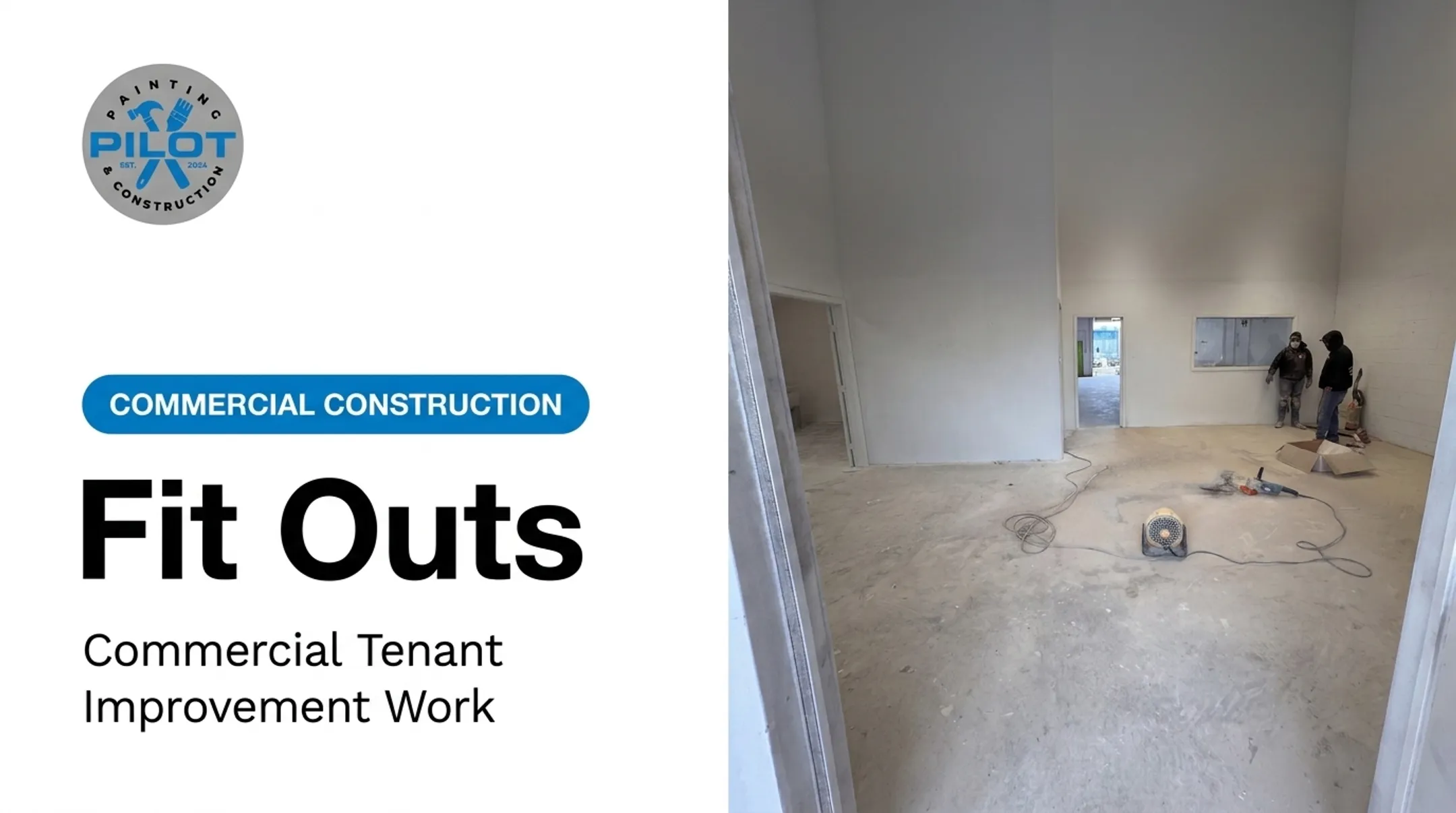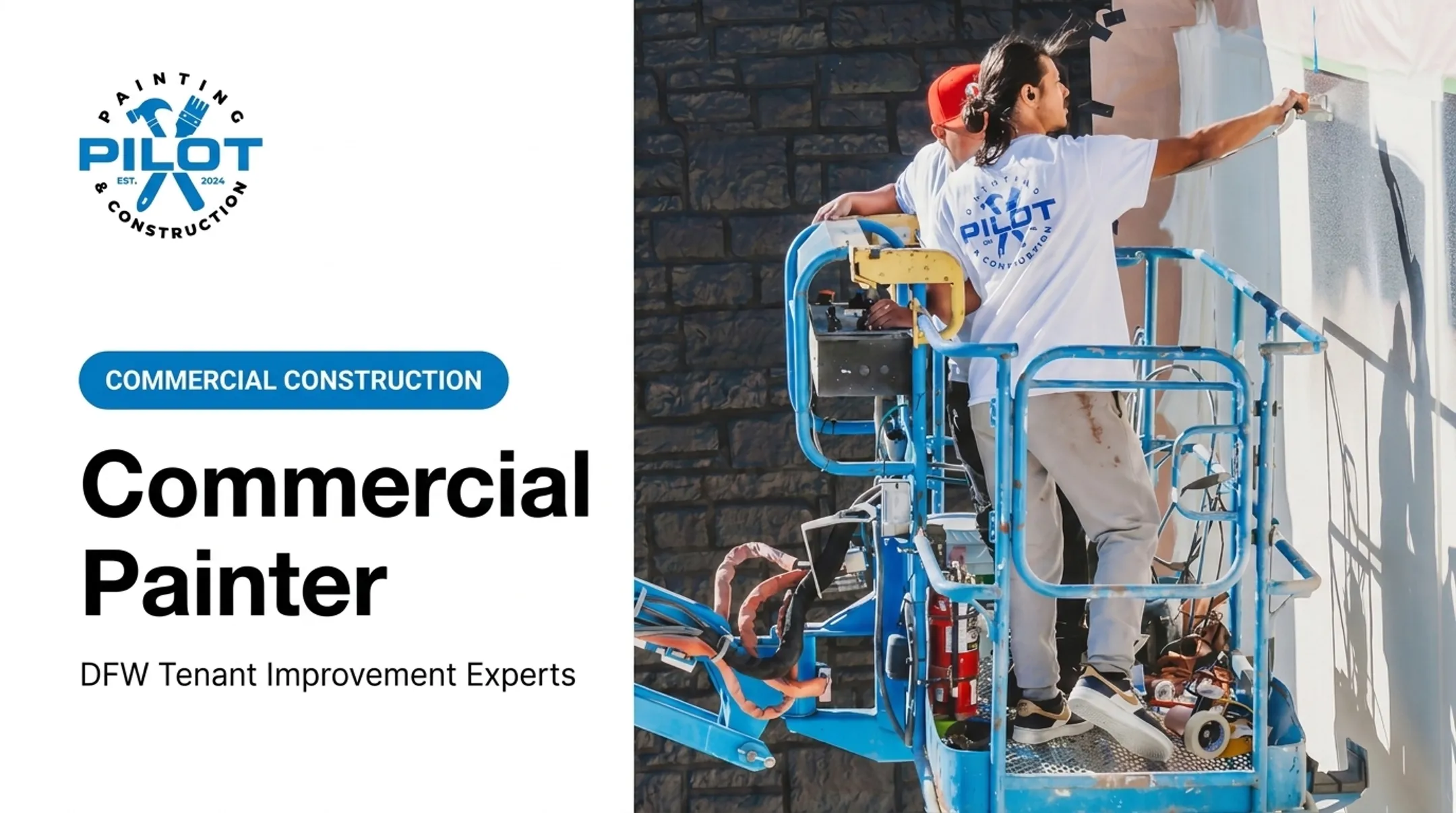

This guide breaks down the process, what it costs, the six official finish levels, and how to vet a contractor before you sign anything. Pilot Painting & Construction handles commercial drywall repair, installation, and finishing as part of renovation and tenant-improvement projects across Dallas, DFW, and North Texas.
Key Takeaways
- Taping and mudding labor typically runs $0.40–$0.70 per sq ft; finishing labor adds $0.50–$1.15 per sq ft on top
- Six official finish levels (0–5) exist, each matched to specific wall uses and paint types
- A base coat of mud always goes down before tape is embedded, not the other way around
- Skipping drying time between coats is the number one DIY mistake that causes cracking
- Hiring an experienced, insured contractor prevents visible seams and expensive redos
What Do Drywall Mudding, Taping, and Finishing Contractors Actually Do?
Drywall mudding, taping, and finishing contractors turn raw board into smooth, paint-ready walls and ceilings. Their work breaks into three stages: bedding, taping, and finishing.
Contractors apply a thin layer of joint compound over each seam, embed tape into that wet compound, then build additional coats over several days, sanding between each one.
"Mud" is the industry term for joint compound. Most formulas are gypsum-based, though some ready-mix products use limestone or vinyl. Finishers rely on this paste to blend seams into a flat surface.
Which Tape Type Gets Used, and When
Contractors typically choose between three options:
- Paper tape – no self-adhesion, must be bedded into wet compound; standard for flat seams
- Self-adhesive fiberglass mesh – sticks directly to the joint, skipping the bedding coat, often used with setting-type compound
- Preformed corner tape – paper, plastic, or thin metal, built for outside corners and edges
A typical job involves 2–3 coats of mud with roughly 24 hours drying time between each, followed by sanding and primer prep. Rushing this timeline is where most jobs go wrong.

Do You Tape or Mud First?
Mud goes down first, as a thin bed coat. Tape gets embedded into that wet layer while it's still workable. Additional mud coats then go over the tape once it's set. Skip the base coat and the tape won't adhere properly, leading to bubbling or lifting later.
Understanding the 6 Levels of Drywall Finish
The Gypsum Association's GA-214-2021 standard defines six finish levels, each requiring more coats and smoother results:
| Level | Best For | What's Included |
|---|---|---|
| 0 | Temporary construction | No taping or finishing at all |
| 1 | Attics, above ceilings | Tape embedded only, tool marks acceptable |
| 2 | Storage areas, tile backing | Tape plus one thin coat over joints |
| 3 | Heavy-texture walls | Tape plus one separate coat, smooth surface |
| 4 | Standard residential/office, flat paint | Tape plus two coats on flats, one on angles |
| 5 | Satin/gloss paint, critical lighting | Level 4 plus a full skim coat |
Picking the right level matters more than most property owners realize. A garage or storage room doesn't need Level 5 treatment — that's wasted money. But a lobby with gloss paint and pendant lighting will show every flaw at anything below Level 5. Bathrooms and kitchens usually land at Level 4 minimum, since moisture and glossier paints reveal imperfections that flat paint hides.

How Much Does Drywall Mudding, Taping, and Finishing Cost?
Pricing depends heavily on scope. Separate the labor categories before comparing bids:
- Taping and mudding only: $0.40–$0.70 per sq ft in labor
- Finishing labor: $0.50–$1.15 per sq ft
- Full installed cost (materials plus labor, hanging through finish): $1.50–$3.50 per sq ft, according to Fixr's 2025 cost data
Why Level 5 Costs More Than Level 2
Level 2 needs one thin coat over the tape and minimal cleanup. Level 5 requires the full three-coat sequence plus a skim coat across the entire surface: more material, more sanding, more labor hours. That difference alone can push per-square-foot pricing toward the top of the range.
What About a 12x12 Room?
HomeAdvisor lists $600–$1,800 for a full 12x12 bedroom's drywall materials and installation. That figure covers hanging and finishing together, not finishing alone, and the final number shifts based on which finish level you choose.
Factors that swing your final price:
- Room size and ceiling height
- Number of seams and corners
- Texture requirements
- Accessibility (tight crawlspaces, high ceilings, existing furniture)
- Regional labor rates across North Texas
Bundling drywall work with painting or a broader remodel often streamlines scheduling. Pilot Painting & Construction structures renovation and tenant-improvement projects so one crew can handle wall prep through final paint, which cuts coordination gaps between trades.

DIY vs. Hiring a Professional Drywall Finishing Contractor
Small patch jobs, like fixing a doorknob hole or a hairline crack, are reasonable weekend projects. Full-room or whole-house finishing is a different animal entirely.
Common DIY pitfalls include:
- Rushing dry time between coats, causing shrinkage and cracking
- Applying too much pressure, which pulls tape out of place
- Uneven sanding that leaves visible ridges once paint goes on
- Skipping thin, multiple coats in favor of one thick application
This Old House notes that drying typically takes about 24 hours but varies with humidity and airflow. Patience matters as much as technique—and rushing that wait is where most DIY finishes fail.
Professional finishers deliver a smoother, paint-ready surface and move faster with the right tools and reps behind them. For full rooms, multi-wall repairs, or commercial spaces where downtime costs money, hiring a contractor usually pays off in finish quality and schedule.
How to Choose the Right Drywall Finishing Contractor
Before hiring anyone, take these steps:
- Get multiple in-person estimates: written quotes should specify finish level, coat count, and materials
- Verify licensing and insurance directly with the issuing agency, not just by taking a contractor's word for it
- Review past projects or references, especially for work similar in scope to yours
- Ask which finish level they recommend for your specific space, and why
A contractor who can explain finish-level tradeoffs clearly, rather than defaulting to "we always do Level 4," usually understands the craft better.

Combined drywall-and-paint crews, such as Pilot Painting & Construction, keep wall prep through final paint under one plan. You avoid an extra handoff and the mismatched expectations that show up when separate trades interpret the same finish differently.
Frequently Asked Questions
How much does mudding and taping cost per square foot?
Taping and mudding labor generally runs $0.40–$0.70 per square foot. That's separate from finishing, which adds another $0.50–$1.15 per square foot on top.
How much would it cost to drywall a 12x12 room?
A 12x12 room typically runs $600–$1,800 for materials and installation combined, according to HomeAdvisor. The exact cost depends heavily on which finish level you choose.
When drywalling, do you tape or mud first?
Mud goes down first as a thin bed coat. Tape is embedded into that wet layer, then additional mud coats go over top once it sets.
How long does it take to finish drywall?
Expect roughly 2–3 days for a typical room, factoring in drying time of about 24 hours between each coat. Humidity and airflow can extend that timeline.
Can I finish drywall myself?
Small patches are manageable DIY projects for most homeowners. Full rooms or highly visible areas are better left to professionals, since uneven sanding and rushed drying are hard to hide once paint goes on.
What's the difference between drywall tape and drywall mud?
Tape is the reinforcement material , paper, fiberglass mesh, or preformed corner strips, that bridges seams. Mud is the joint compound used to embed that tape and smooth the surface around it.