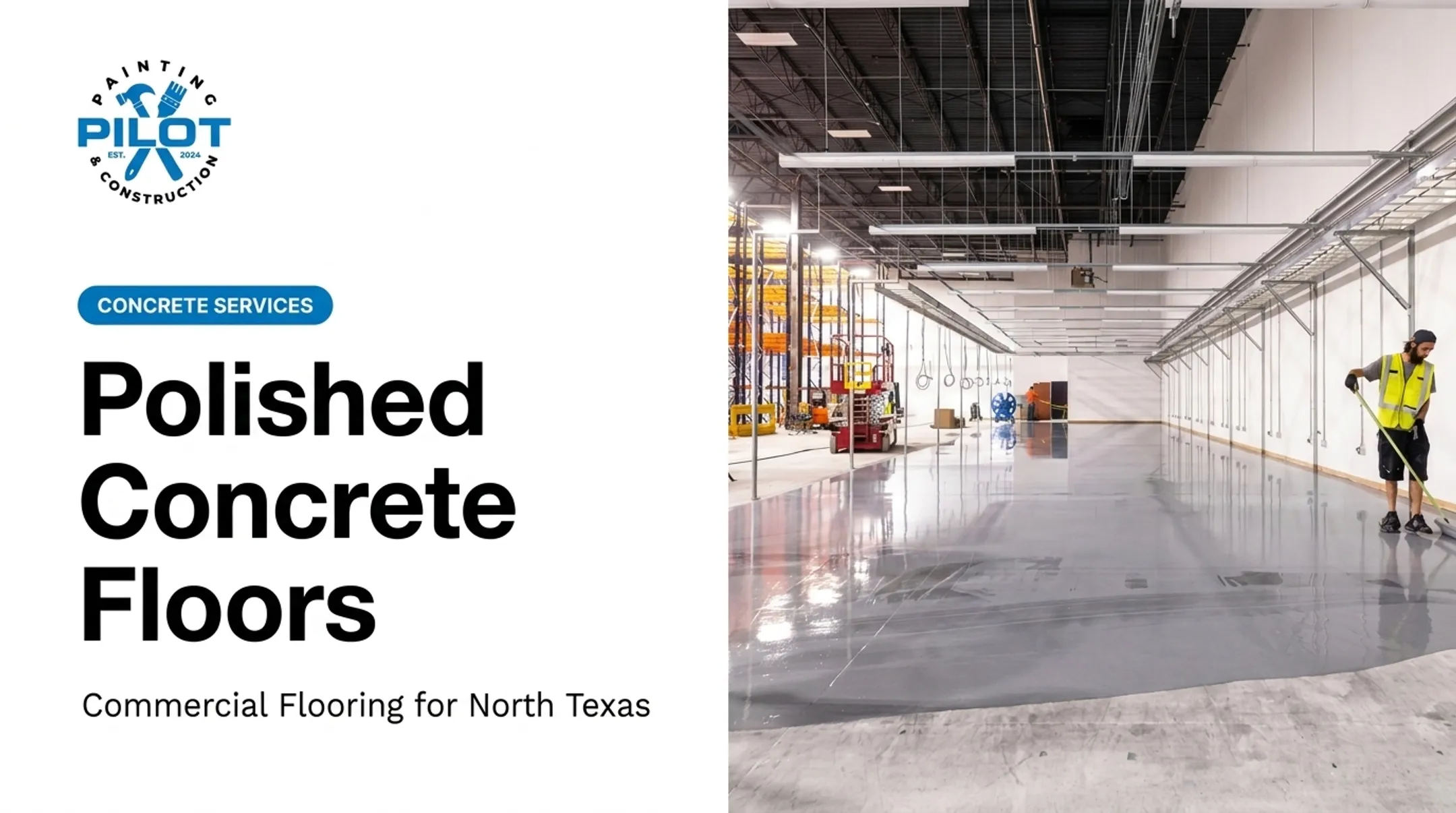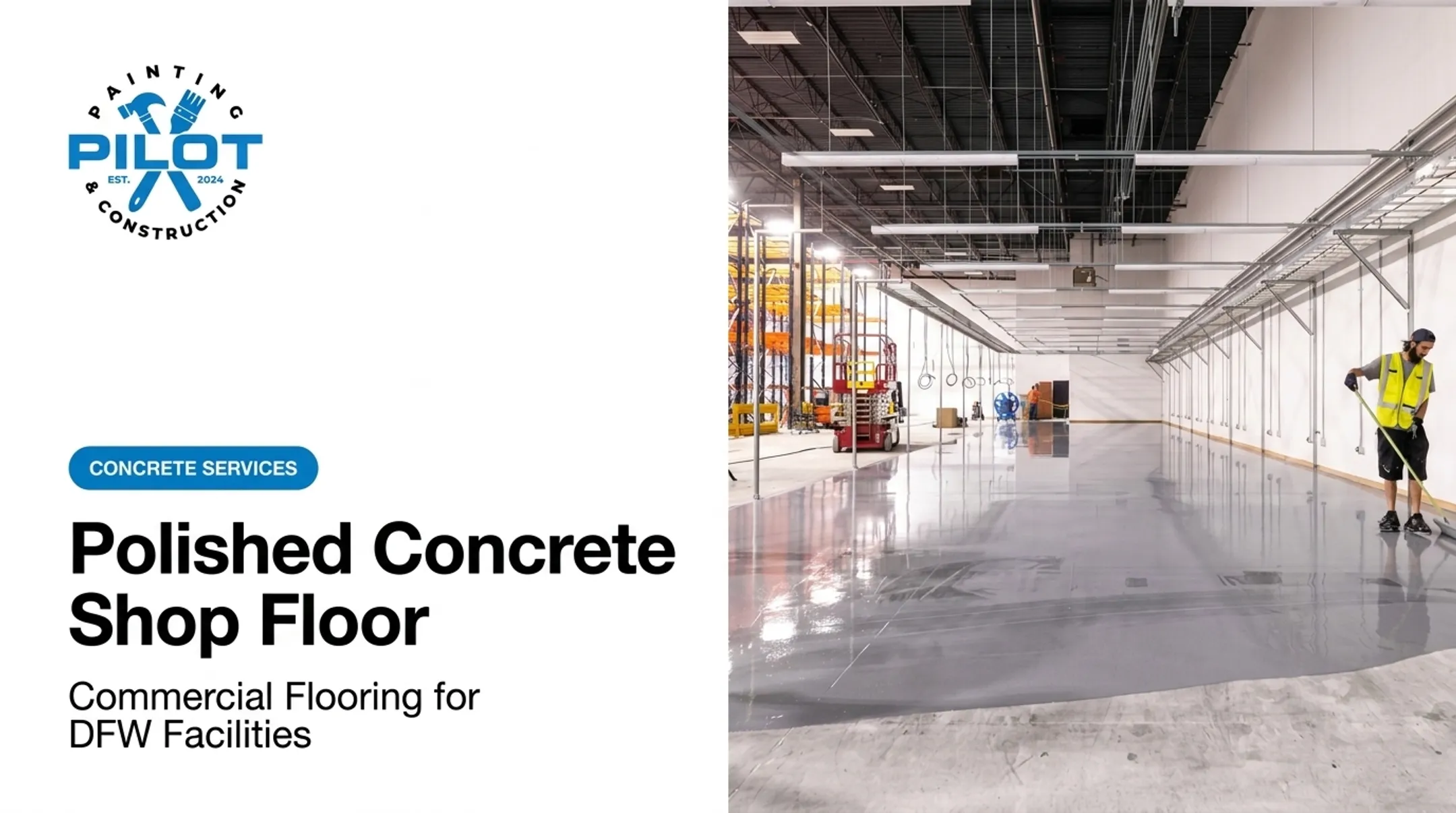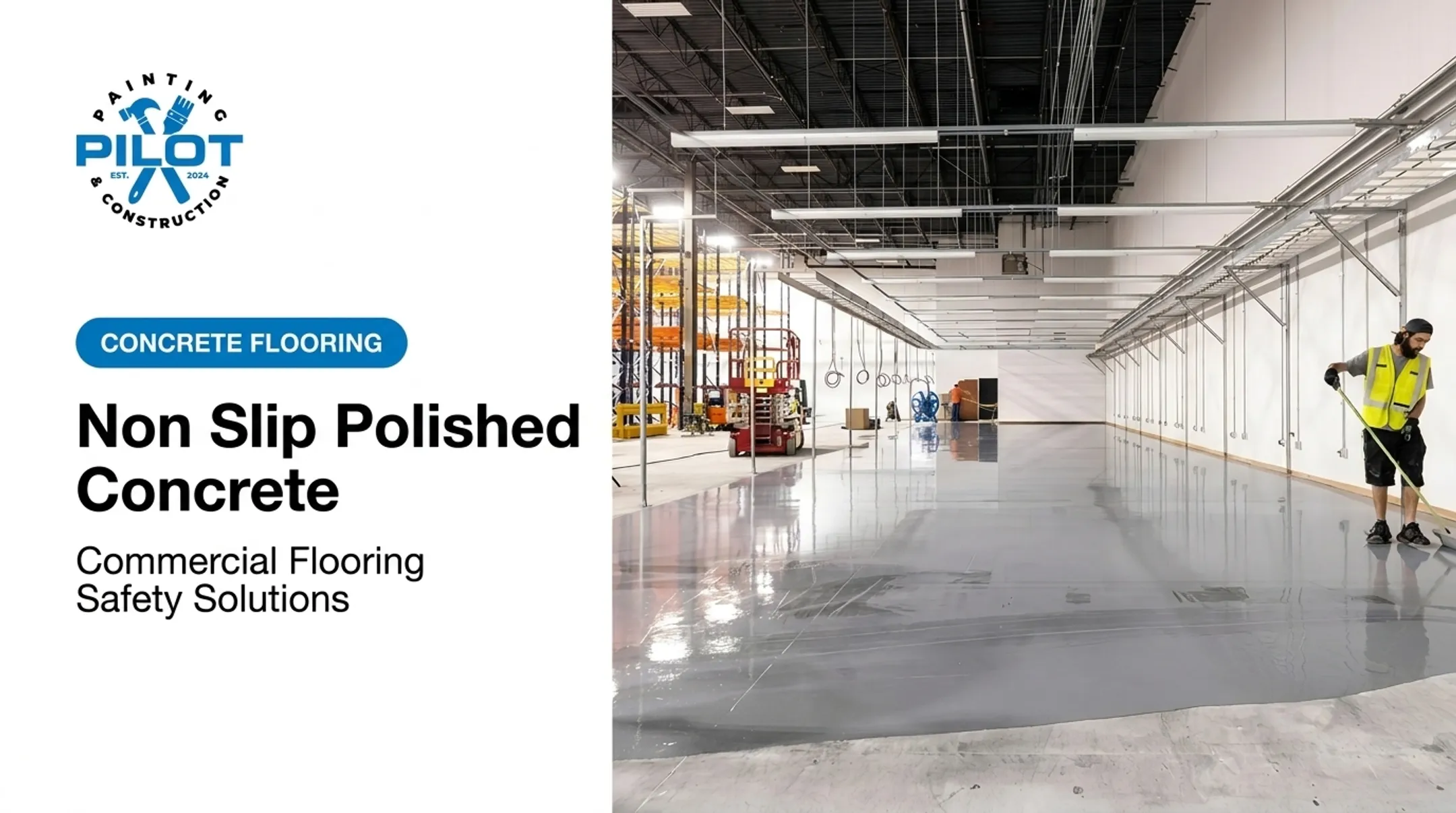

Commercial polished concrete has become the go-to answer for offices, retail stores, restaurants, and industrial facilities across DFW. It transforms an existing slab into a durable, low-maintenance surface without the ongoing costs of traditional flooring systems.
This guide covers the process, real benefits, cost ranges, how it stacks up against tile, vinyl, and epoxy, and how to pick a contractor who won't cut corners.
Key Takeaways
- Mechanically polished concrete withstands heavy foot and forklift traffic with minimal upkeep
- Pricing typically runs $3 to $12 per square foot, depending on slab condition and finish
- Lifecycle costs often beat tile, vinyl, and epoxy once maintenance and replacement are factored in
- Retail, restaurants, offices, and warehouses across DFW are all strong fits
- Contractor experience determines whether the floor lasts decades or fails early
What Is Commercial Polished Concrete Flooring?
True polished concrete isn't paint or a coating. It's a mechanical process. Contractors use progressively finer diamond-embedded tooling to grind, hone, and polish the existing slab surface until it reaches a specified gloss level.
The Concrete Polishing Association of America defines this bonded-abrasive method as a multi-step operation, refining each cut in stages rather than applying a single topical layer. A chemical densifier is often used partway through to harden the surface and improve stain resistance, but it supplements the grinding process rather than replacing it.

This matters because "polished look" coatings are not the same thing. A topical polish is essentially a film-forming sealer that sits on top of the slab, filling in surface imperfections to create shine. These systems tend to wear faster and need more frequent recoating than a true mechanically polished floor.
Common Finish Types
- Salt and pepper: Light grinding exposes small sand particles for a subtle, textured look — the most economical option
- Exposed aggregate: Deeper grinding reveals larger stone aggregate, creating a bolder, more decorative finish
- Stained or dyed: Color is applied before or during polishing to match brand identity or design goals

Key Benefits of Commercial Polished Concrete Flooring
Built for Heavy Use
Polished concrete holds up under forklifts, pallet jacks, shopping carts, and daily foot traffic. Because the existing slab is refined rather than covered with a new material, there's no separate layer to peel, crack, or delaminate over time.
Lower Maintenance Costs
Facility managers save on labor because there's no waxing or sealing schedule to maintain. Daily care is simple:
- Dust mop or microfiber mop to remove grit
- Damp mop with a neutral pH cleaner as needed
- Address spills promptly to prevent staining
Slip Resistance, Properly Specified
Safety matters. Same-level falls caused 145 worker deaths in 2024 and over 405,000 recordable injury cases in 2023-2024, according to the National Safety Council. The National Floor Safety Institute estimates fall-related medical costs at roughly $80 billion annually.
Slip resistance shouldn't be an afterthought. Properly finished polished concrete can be tested and specified to meet acceptable wet-traction standards, but this requires project-specific testing rather than assuming any polished floor is automatically safe.
Aesthetic Flexibility
Gloss level, color, dye, and aggregate exposure can be tuned from matte utility finishes to high-gloss brand floors—whether you need a sleek retail showroom or a clean industrial warehouse.
Sustainability and Air Quality
Polishing reuses the existing slab instead of demolishing and replacing it, cutting construction waste. It also skips resilient-floor adhesives and coatings, which the EPA notes can be a source of indoor VOCs. Less demolition, fewer chemical layers.

How Much Does Commercial Polished Concrete Flooring Cost?
Nationally, grinding and polishing existing concrete typically runs $3 to $12 per square foot. Extensive slab prep can add roughly $2 per square foot.
Final pricing depends on a few project factors:
- Square footage — larger commercial spaces often price more efficiently per square foot
- Existing slab condition — cracks, spalling, or unevenness add repair costs
- Desired finish and gloss level — deeper grinding for exposed aggregate costs more than a light salt-and-pepper finish
- Site obstacles — tight rooms or raised subfloors slow the work
Upfront cost vs. long-term value: A tile or vinyl floor might look cheaper on day one, but recoating, regrouting, and replacement cycles add up. Polished concrete's main expense is installation; after that, maintenance costs stay low for years.
The only way to get an accurate number for your building is an on-site assessment. Pilot Painting & Construction provides quotes for commercial flooring and concrete projects throughout DFW and North Texas, so you know what you're paying for before work starts.
Polished Concrete vs. Other Commercial Flooring Options
Vs. Tile: Polished concrete has no grout lines to scrub or stain. Tile can crack under heavy point loads and requires ongoing grout maintenance.
Vs. Vinyl/Laminate: Vinyl and laminate scratch and dent under rolling carts, pallet jacks, and heavy foot traffic. Polished concrete holds up to those impacts over a much longer service life.
Vs. Epoxy: Epoxy coatings can peel or delaminate under sustained heavy traffic and need periodic recoating. Because polished concrete is the slab itself, there's no coating layer to fail.
| Flooring Type | Durability | Maintenance | Cost Over Time | Aesthetics |
|---|---|---|---|---|
| Polished Concrete | Very high | Low (sweep/mop) | Low after install | Modern, customizable |
| Tile | Moderate (cracks under load) | Moderate (grout care) | Moderate | Classic, varied |
| Vinyl/Laminate | Lower (scratches, dents) | Moderate | Higher (replacement cycles) | Varied styles |
| Epoxy | Moderate (can peel) | Moderate (recoating) | Moderate-high | Glossy, colorful |

Industry lifecycle studies from the Tile Council of North America put tile at about $71–$73 per square foot over 75 years in office settings. Vinyl and epoxy systems cost more over that same span.
Polished concrete was not in that study. Even so, finishing the existing slab avoids recoat and replacement cycles, which keeps lifetime cost and maintenance low.
Best Applications for Commercial Polished Concrete
Polished concrete fits commercial spaces where traffic, spills, and appearance all compete for attention:
- Retail stores and showrooms: High-gloss finishes brighten the space and make merchandise pop under lighting
- Restaurants and breweries: Stain resistance and easy sanitation handle spills and heavy foot traffic between service rushes
- Offices and tenant improvements: Clean, modern look that fits professional environments without carpet upkeep
- Warehouses and industrial facilities: Heavy-duty durability that stands up to forklifts, pallet jacks, and constant machinery movement

Maintenance and Considerations Before Installing
Daily care is straightforward. A few habits keep polished concrete looking sharp for years:
- Dust mop or microfiber mop for routine cleaning
- Use a neutral pH cleaner for wet cleaning
- Avoid acidic products or wax that dull the finish
- Burnish periodically to keep gloss levels consistent
Potential downsides to plan for:
- Concrete is a hard surface, which can mean more noise and less cushioning underfoot than carpet — mats in key areas help
- Existing slab damage (cracks, spalling) needs repair before polishing, which can add to project scope
- Not every contractor performs true mechanical polishing; some substitute topical coatings and call it polished concrete
Hiring an experienced contractor matters. Pilot Painting & Construction brings commercial construction experience across office, retail, industrial, and restaurant properties throughout DFW and North Texas. The team works directly with property owners to plan flooring projects that minimize disruption to daily operations.
Frequently Asked Questions
How much does commercial polished concrete flooring cost?
Cost depends on slab condition, square footage, and finish level, generally falling between $3 and $12 per square foot. Get a site-specific quote for accurate pricing on your property.
How long does commercial polished concrete flooring last?
With proper installation and basic maintenance, polished concrete can last decades, often outlasting tile, vinyl, and epoxy alternatives in high-traffic commercial settings.
Is commercial polished concrete flooring cheaper than tile or other flooring options?
Upfront costs can be comparable to tile or epoxy, but total lifecycle cost is usually lower thanks to reduced maintenance, no recoating cycles, and fewer replacements over time.
Are commercial polished concrete floors a good choice for businesses?
For most high-traffic commercial settings, yes. The right fit depends on your foot or vehicle traffic levels, aesthetic goals, and budget for upfront installation versus long-term savings.
Is polished concrete slippery or unsafe for customers and employees?
Properly specified and tested polished concrete meets accepted slip-resistance standards, comparable to other smooth commercial flooring. Project-specific testing ensures the finish is safe for your space.
How long does installation take for a commercial polished concrete floor?
Timelines vary based on square footage, slab condition, and finish complexity. Discuss scheduling with your contractor early to minimize disruption to business operations.