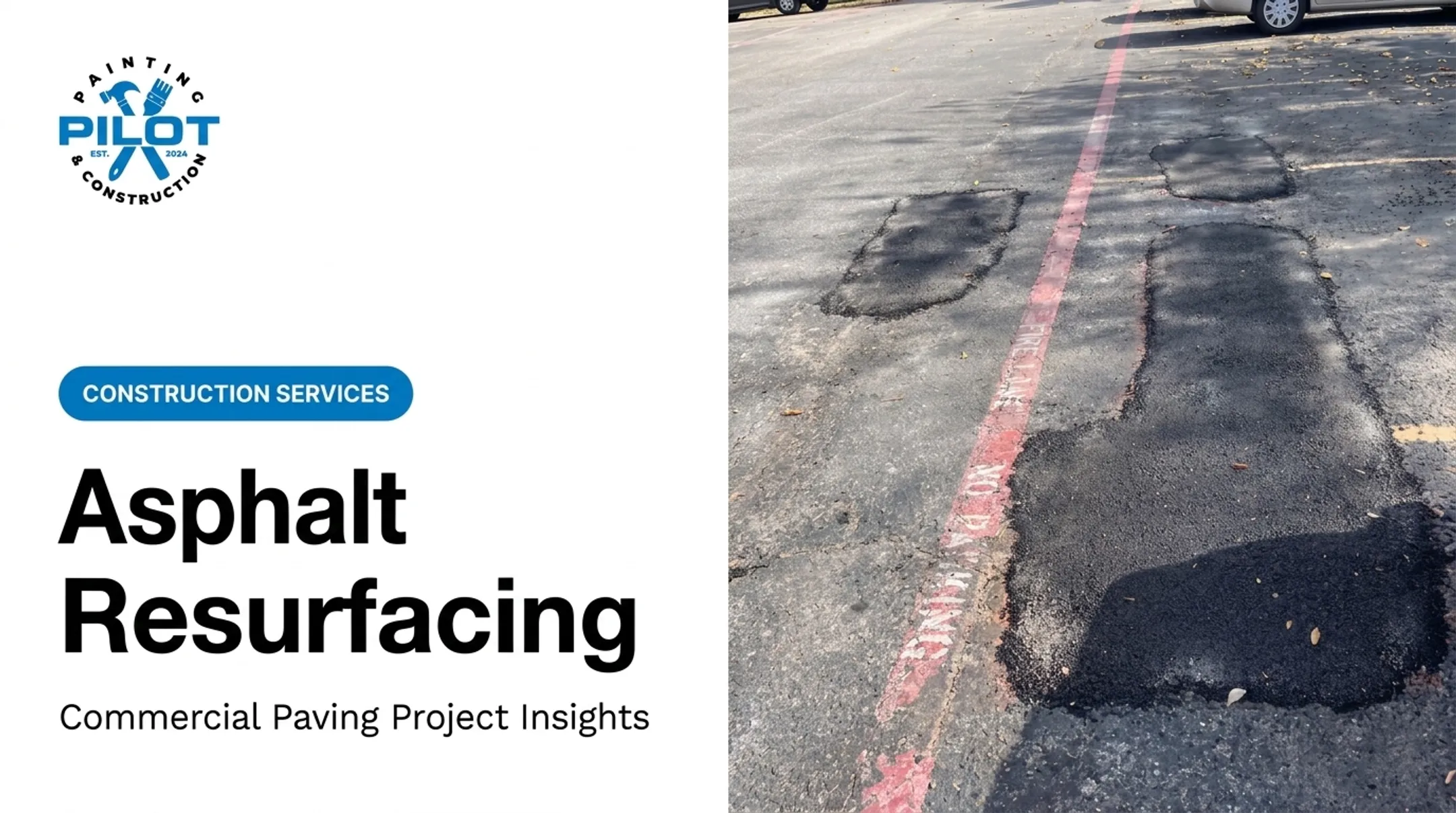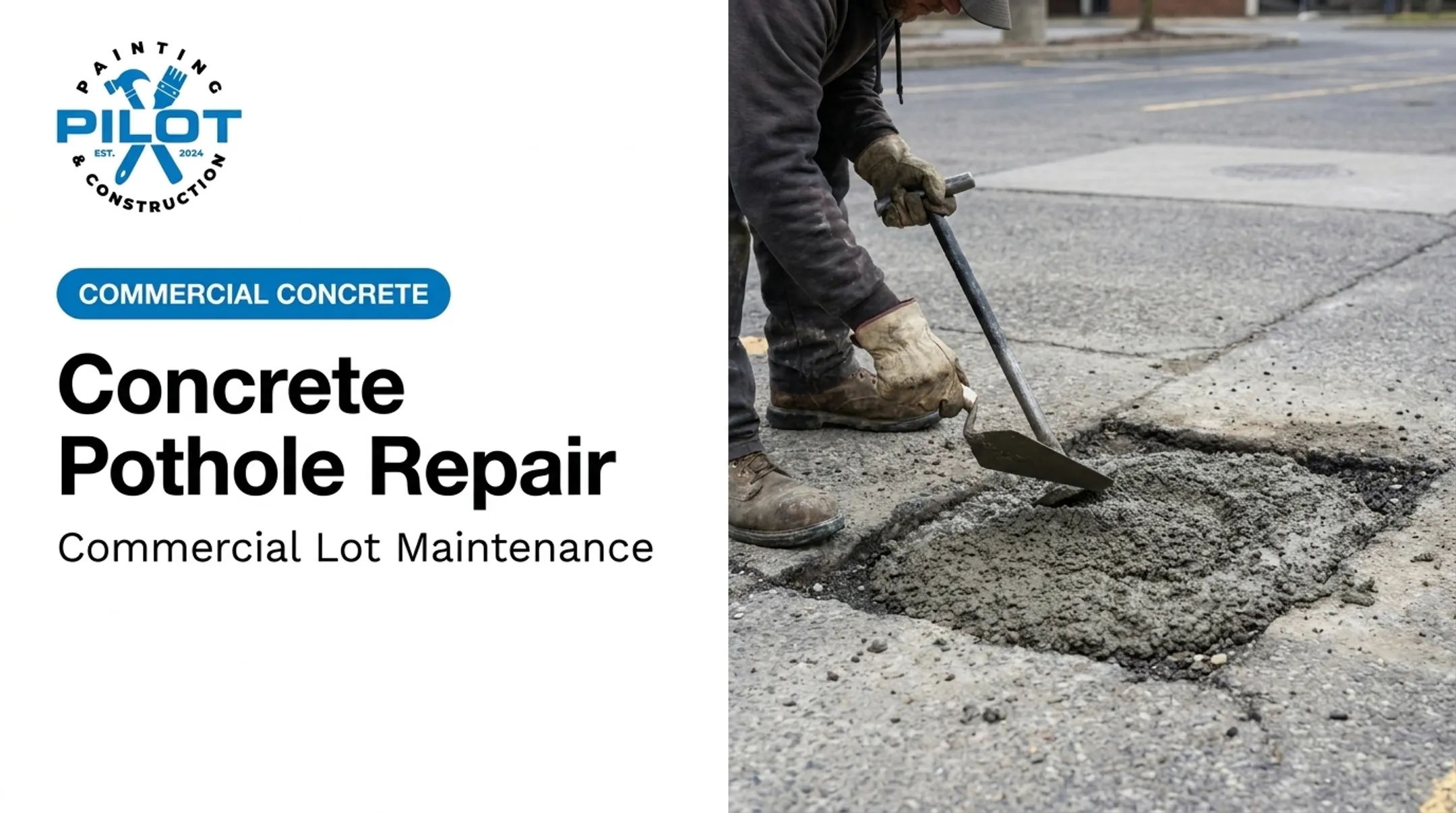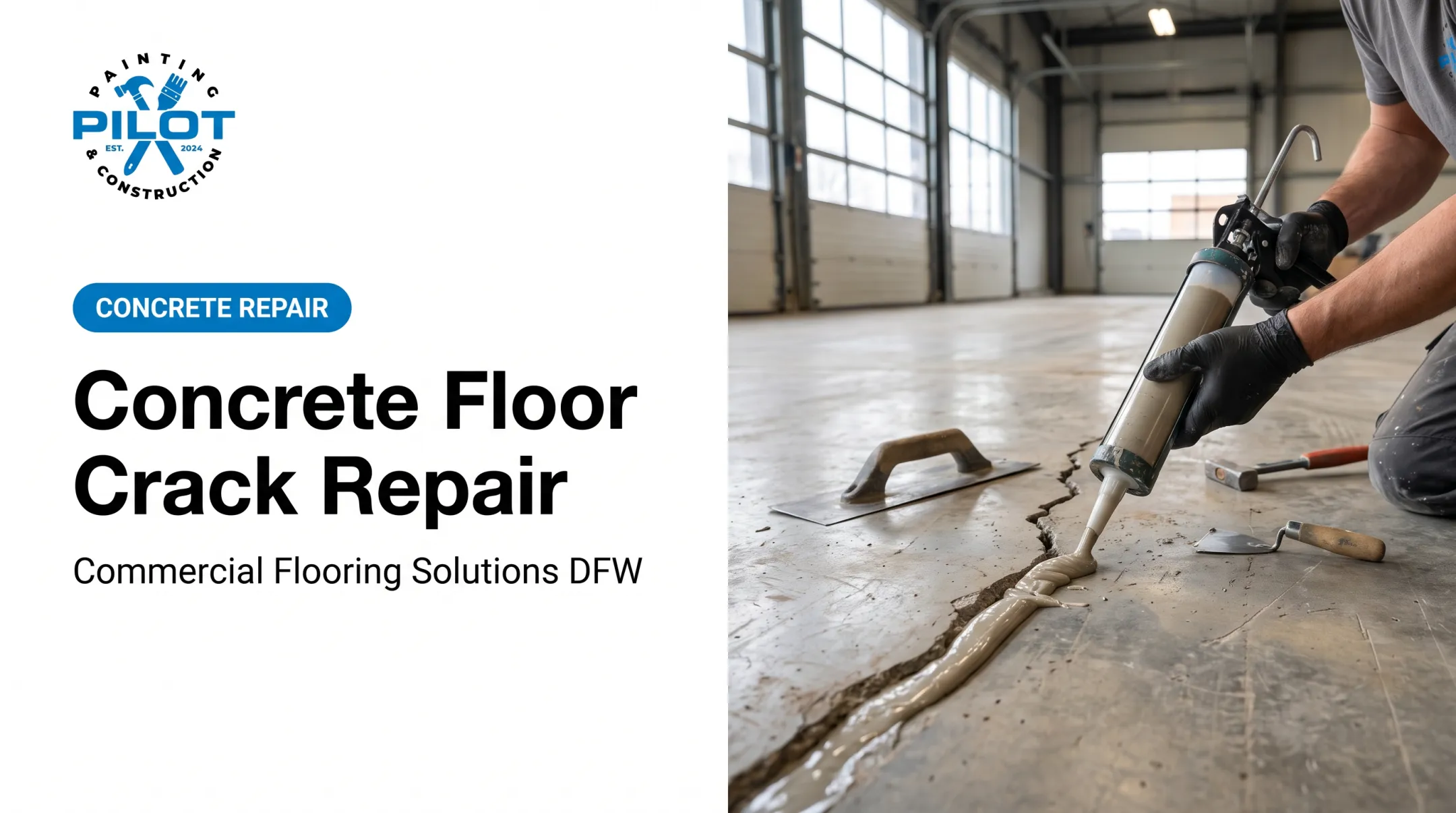

Asphalt takes a beating from Texas summers, sudden downpours, and daily traffic loads. Left unaddressed, small cracks become expensive structural failures. This guide breaks down common problems, step-by-step repair methods, and how to decide between patching and full replacement, including when it's time to call a professional like Pilot Painting & Construction.
TL;DR
- Common failures: potholes, alligator cracking, edge cracking, and drainage problems drive most parking lot repairs
- Patch vs. replace: damage extent, pavement age, and base condition decide which fix will last
- Repair sequence: clean, cut out damaged material, patch or seal, compact, then cure
- When to call a pro: potholes, drainage failures, or anything beyond simple crack sealing
What Is Parking Lot Patching and Repair?
Parking lot patching and repair fixes damaged sections of asphalt without replacing the entire lot. It includes crack filling, pothole patching, and localized resurfacing.
Asphalt is a flexible pavement material. UV exposure, water, and constant traffic load cause it to degrade over time, so ongoing maintenance is built into how the material works—not an optional extra.
Patching is one stage in a longer pavement lifecycle:
- Sealcoating – protects the surface from water and UV
- Crack sealing – stops water infiltration at weak points
- Patching – fixes localized failures
- Overlay – adds a new structural layer over aging pavement
- Full replacement – rebuilds the pavement once the base is compromised

Common Problems With Parking Lot Pavement
Most asphalt failures follow predictable patterns. Water gets in, traffic stresses the surface, and the damage compounds over time.
Potholes
Bowl-shaped depressions with loose debris and standing water are the telltale signs. According to FHWA's Distress Identification Manual, traffic displaces asphalt fragments, then water seeps into the gap and weakens the base and subgrade below.
Alligator Cracking
Interconnected cracks that resemble alligator skin indicate foundation failure. Research from NCHRP's rehabilitation strategies report identifies this as the principal structural distress in pavements with granular bases, driven by repeated wheel-path loading over time.
Edge Cracking
Cracks running along the lot's perimeter usually point to a lack of edge support or poor drainage at the pavement's boundary.
Standing Water and Drainage Issues
Puddles that won't drain or soft, spongy spots signal improper grading, clogged drains, or pavement that has settled unevenly.

Why Parking Lots Fail (Root Causes)
Four factors drive most pavement failures:
- Traffic load – vehicle weight accumulates stress over years
- Environmental exposure – UV rays, rain, and freeze-thaw cycles break down the surface
- Poor original installation – inadequate base preparation dooms a lot from day one
- Lack of preventive maintenance – skipping sealcoating and crack sealing accelerates decay
Ignoring these issues doesn't make them go away. It makes them worse.
What happens if you wait:
- Pavement deteriorates faster, and repairs get costlier
- Trip hazards and vehicle damage create liability exposure
- Curb appeal suffers, affecting tenants and customers
- Eventually, a simple patch job turns into full-depth replacement
TxDOT's maintenance guidance confirms cracks let surface water into the subgrade and destabilize the pavement structure. Catching those cracks early keeps water out of the base and stops a simple patch from becoming full-depth replacement.
How to Patch and Repair a Parking Lot (Step-by-Step)
Identifying the type and severity of damage first ensures you use the right method. Skip this step, and you risk repeat failures.
Step 1: Assess and Clean the Damaged Area
Survey the lot for cracks, potholes, and stains. Remove debris, vegetation, and loose asphalt with a broom, blower, or pressure washer. Treat oil, grease, or fuel stains separately. Left untreated, they can drive contaminants deeper into the surface.
Step 2: Prepare the Repair Site
Cut out damaged asphalt down to firm, stable subgrade. Shape the cut into clean, square edges for proper compaction. If water contributed to the failure, install or repair drainage before moving forward.
Step 3: Apply the Appropriate Fix
- Potholes: Tack the edges, fill with hot mix or cold patch asphalt, and compact in layers if deeper than 6 inches.
- Cracks under 1 inch: Apply crack filler or sealant after cleaning and drying.
- Larger cracks or alligatoring: Use hot rubberized crack sealing or a full patch, depending on subgrade condition.
- Widespread deterioration: Choose an asphalt overlay or full-depth repair instead of spot patching.
Step 4: Compact, Cure, and Test
Compact new material with a rubber-tired roller to match the surrounding grade. Close off the area for at least 24 hours to cure, though weather and material type can shift that timeline. Once open, inspect the patch under vehicle load to confirm it holds and drains properly.

When Should You Patch vs. Replace Your Parking Lot?
Cost, safety, and long-term durability should guide this decision. Here's how it typically plays out:
| Scenario | Patch | Replace |
|---|---|---|
| Isolated cracks or a few small potholes | Cost-effective, quick fix | Not needed unless damage recurs |
| Widespread alligator cracking | Temporary fix only, base is likely compromised | Full-depth reclamation or overlay makes more sense |
| Lot older than 15-20 years, frequent repairs | Short-term band-aid, cumulative costs add up | Financially smarter once repair costs near replacement cost |
| Drainage-related failures | Won't fix the root cause | Regrading or new drainage plus resurfacing usually required |
The takeaway: patching solves surface problems. If the base is compromised, no amount of patching will fix that permanently.
Common Mistakes to Avoid When Patching a Parking Lot
Even careful repairs fail early when crews cut corners on prep, compaction, or drainage:
- Leaving damaged material in place instead of cutting down to firm subgrade
- Skipping compaction, so the patch sinks or breaks up under traffic
- Fixing the surface while ignoring the drainage issue that caused the damage
- Using cold patch as a permanent fix in high-traffic areas that need hot mix
Preventive Measures and Professional Help
Regular maintenance costs less than emergency repairs. Every time.
Preventive actions worth building into your schedule:
- Routine inspections to catch small cracks before they become potholes
- Sealcoating to protect against water and UV damage
- Keeping the lot swept and free of standing debris
- Regular inspection and clearing of drainage systems
When damage outpaces routine upkeep, bringing in a pro protects your investment. Property owners across North Texas can turn to Pilot Painting & Construction for commercial parking lot repair and related concrete work.
Services include crack filling, asphalt sealcoating, general asphalt maintenance, and concrete-surface restoration—focused on safety, appearance, compliance, and longer pavement life. Traffic striping is also available to keep your lot organized and ADA-compliant.

Conclusion
Most parking lot cracks and potholes are fixable if you catch them early and use the correct repair method. The real key is diagnosing the root cause, whether that's water, traffic, or base failure, so you're not patching the same spot every six months.
Knowing when to patch versus replace saves property owners money and downtime. When in doubt, get a professional assessment before the problem grows. Pilot Painting & Construction handles parking lot repair across Pilot Point, DFW, and North Texas—reach out for an on-site evaluation before small damage turns into a full replacement.
Frequently Asked Questions
How much does it cost to patch a parking lot?
Costs vary based on damage size, asphalt type, and labor requirements. For an accurate estimate, request a quote from a professional contractor who can assess your specific lot.
Is sealcoating a parking lot worth it?
Yes, sealcoating protects against water and UV damage, extending pavement life and reducing future repair costs. It's not a substitute for fixing structural or drainage problems, though.
How is a parking lot repaved?
The general process includes removing old asphalt or applying an overlay, grading the surface, laying new asphalt, and compacting it to the proper density. Specifics depend on the extent of existing damage.
How long does asphalt patch repair take to cure?
Most patches need about 24 hours before reopening to traffic, though this depends on weather conditions and the material used. Always follow the product's specific guidance.
Can I patch a parking lot myself or should I hire a professional?
Small cracks may be DIY-friendly with the right sealant. Potholes, drainage issues, and larger repairs are best left to professionals who can properly assess the subgrade.
How often should a parking lot be inspected for damage?
Seasonal inspections, especially after winter freeze-thaw cycles, help catch issues early. Add a check after major storms or whenever you notice new ponding or cracking.
Ready to address parking lot damage before it gets worse? Contact Pilot Painting & Construction at 940-286-3838 or request a quote at pilotpaintingco.com/commercial.