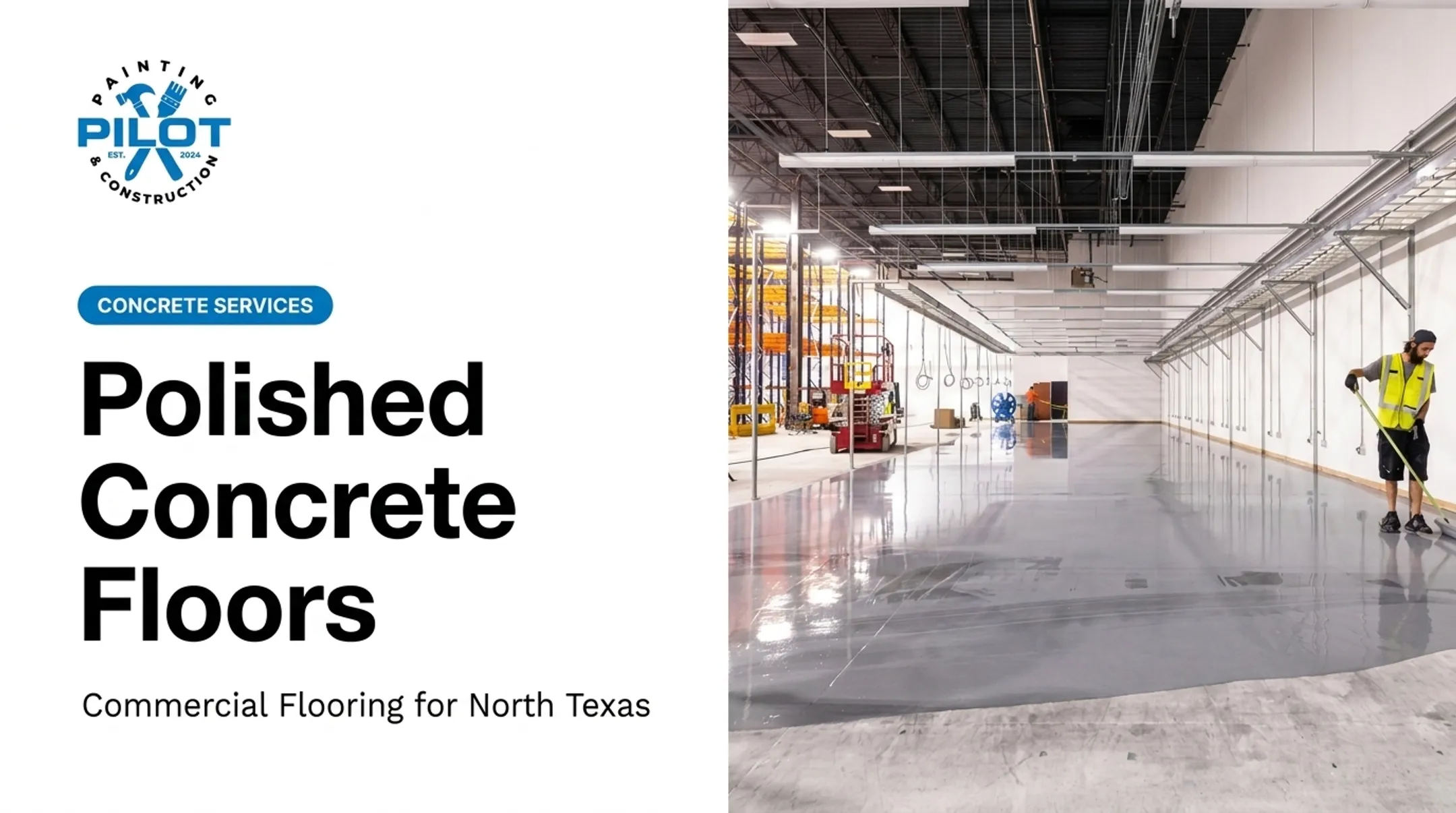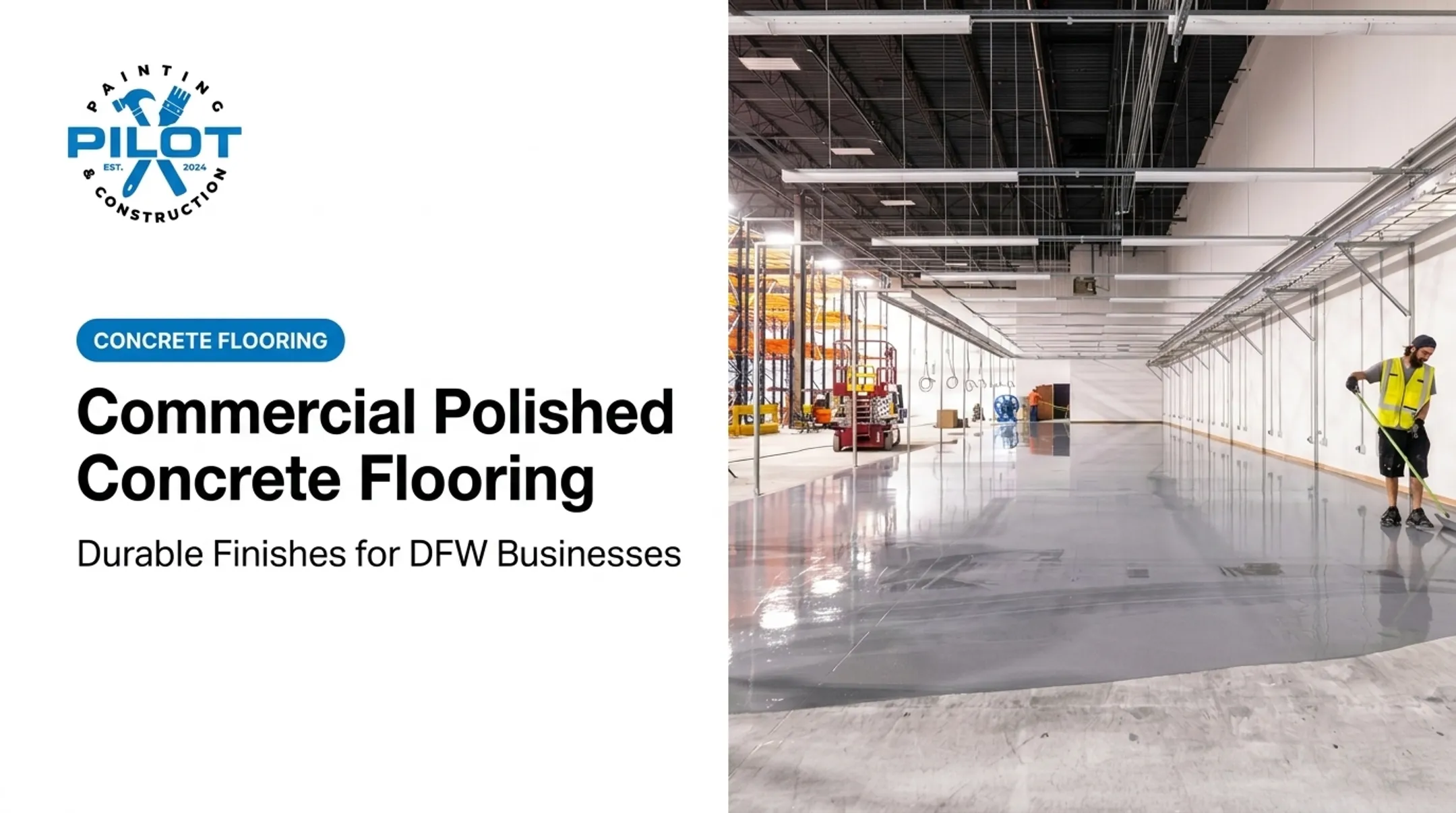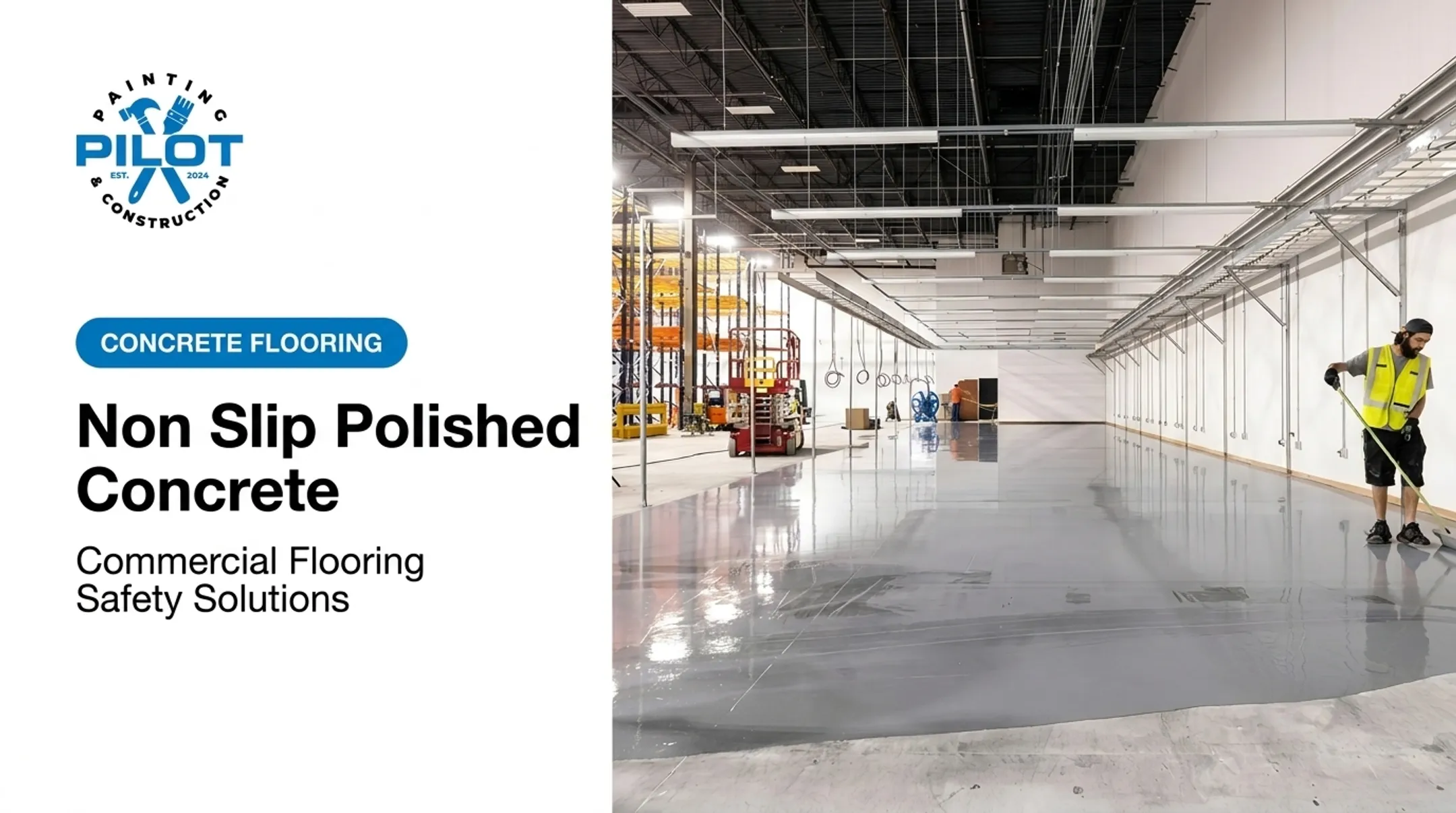

Polished concrete has become a go-to solution for shops that need a floor tough enough to handle it all. It's durable, cost-effective, and doesn't require the constant upkeep that coatings demand.
This guide covers what polished concrete actually is, the benefits worth knowing, what installation looks like, realistic cost ranges, and how to pick a contractor who won't cut corners.
Key Takeaways
- Polished concrete delivers a durable, low-maintenance floor built for shop-level abuse
- Final cost hinges on square footage, slab condition, and finish level
- Proper install and upkeep can keep the floor performing for decades
- Contractor experience with commercial slabs makes or breaks the final result
What Is a Polished Concrete Shop Floor?
Polished concrete is a mechanical refinement of the existing slab, not a coating applied on top. Contractors use progressively finer diamond abrasives to grind, hone, and polish the surface to a specified gloss level.
Per the ASCC Concrete Polishing Council, true polished concrete means the slab itself is refined. A surface coating like epoxy does not meet that definition (ASCC glossary).
This matters for shop owners comparing options:
- Polished concrete: Grinds and refines the existing slab, no film to peel or chip
- Epoxy coatings: A separate material applied over the slab, which can delaminate under heavy wear
- Sealed concrete: A basic topical treatment with far less durability and shine
Aggregate Exposure Levels
How much of the stone aggregate shows through affects both appearance and cost. The ASCC's 2024 aggregate exposure chart breaks it into three classes:
| Class | Common Name | Appearance |
|---|---|---|
| A | Cream finish | Mostly cement fines, minimal aggregate |
| B | Salt-and-pepper | Balanced mix of fine aggregate and cement |
| C | Full aggregate | Coarse aggregate dominates the surface |

Salt-and-pepper is common in shop settings. It hides minor imperfections better than a cream finish while still looking clean.
Benefits of Polished Concrete for Shop Floors
Built for Heavy-Duty Use
There's no coating to peel, chip, or delaminate under dropped tools, rolling toolboxes, or vehicle traffic. Because the finish is part of the slab, wear happens gradually across the whole surface instead of flaking off in patches like epoxy sometimes does.
Stands Up to Chemicals
Shops deal with oil, grease, brake fluid, and solvents constantly. A compatible penetrating guard, such as a solvent-based repellent, helps resist staining without leaving a slick film on top.
Prompt cleanup still matters. No guard makes a floor immune to every chemical, so test your fluids against the sealer you choose.
Easier to Maintain
Compared to epoxy or tile, upkeep is simpler:
- Skips recurring re-coating cycles
- Leaves no grout lines to trap grime
- Avoids wax buildup that needs stripping

Reflective Surface, Better Visibility
A polished floor reflects ambient and overhead light, which can brighten a shop bay without adding fixtures. Vendors have cited reflectance values as high as 70%.
No independent study has pinned down a universal energy-savings figure, so treat vendor claims carefully and have your lighting system modeled for your space.
Uses What's Already There
Polishing works with the existing slab rather than adding new material, which cuts down on construction waste compared to installing an entirely new floor system.
The Polished Concrete Installation Process
Polished concrete is a multi-step process. Each stage builds on the last, and the sequence matters if you want a durable finish without unnecessary shop downtime.
Surface Prep
Before any grinding starts, the slab gets cleaned, old coatings or adhesives are stripped, and cracks or joints are repaired. Skipping this step shows up later as inconsistent gloss or visible flaws.
Grinding
Contractors grind with progressively finer diamond grits. A typical path starts around 30–40 grit, then moves through 80 and 150, and continues higher based on slab hardness and the finish you want.
Densifying
A silicate-based densifier is applied after grinding. It reacts chemically within the slab to harden the surface, making it more resistant to future wear.
Final Polish and Sealant
Higher-grit polishing continues, often into the 800-1500 grit range, before a guard or sealant is applied for stain protection and gloss retention.

Planning Around Downtime
Every slab is different, so timelines vary with square footage, existing damage, and finish level. Pilot Painting & Construction works with commercial and industrial clients across North Texas on floor coatings, polished concrete, and concrete repair. Scheduling is set upfront so shop operations are not caught off guard mid-project.
Is It Expensive to Have a Polished Concrete Shop Floor?
Pricing depends heavily on your starting point. A commercial/industrial estimate places polished concrete generally between $3 and $12 per square foot, though that's a broad planning range, not a fixed quote.
What moves the price:
- Current slab condition (cracks, old coatings, unevenness)
- Total square footage
- Aggregate exposure level chosen
- Repairs needed before polishing can begin
Lifecycle Value
Over a 10-year span, one contractor comparison put polished concrete between roughly $3.00 and $10.50 per square foot depending on finish. Epoxy and MMA coatings ran about $16.50 to $24.00 over the same period.

Use those figures as a planning illustration, not a guaranteed number for your shop floor. A site assessment of your actual slab is the only way to lock in real pricing.
How Long Does a Polished Concrete Shop Floor Last & How to Maintain It?
There's no single universal lifespan figure for heavy shop use. Warranty coverage is a useful benchmark: some manufacturers back polished floors for 10, 15, or even 20 years under specific gloss-retention terms. That guarantee is contractual, not proof every floor performs the same. It does signal the longevity a well-installed system can reach when you maintain it properly.
Daily and Weekly Maintenance
- Dust mop daily to remove grit that can dull the finish
- Auto-scrub weekly with a pH-neutral cleaner
- Wipe up spills immediately, especially oils and solvents
What to Avoid
- Acidic or caustic cleaners
- Steel wool or diamond-impregnated pads
- Wax or topical coatings (they interfere with the polished finish)
Periodic Upkeep
Over time, floors may need re-burnishing or a stain-guard refresh, especially in high-traffic zones. A simple water-bead test tells you when protection is wearing thin. If water no longer beads on the surface, it's time to reapply.
Choosing the Right Contractor for Your Shop Floor
Not every flooring contractor understands the nuances of commercial and industrial slabs. Before hiring anyone, dig into:
- Slab evaluation experience: Assess crack severity, existing coatings, and moisture before quoting—not just a quick walkthrough.
- Past project photos: Ask for commercial or industrial work, not only residential garages.
- Repair capabilities: Confirm they handle spalls, cracks, and joint repair during prep, not as an afterthought.
Pilot Painting & Construction works with commercial property owners, industrial spaces, and retail and office clients across Pilot Point and the greater DFW area. Floor-related work includes polished concrete, floor coatings, concrete repair, and surface restoration.
Frequently Asked Questions
Is it expensive to have a polished concrete shop floor?
Costs typically fall between $3 and $12 per square foot, depending on slab condition, size, and finish level chosen. Getting a site-specific quote is the only way to know your real number.
How long does a polished concrete shop floor last?
With proper installation and maintenance, polished concrete can last decades. Manufacturer warranties often cover 10 to 20 years, and actual lifespan depends on traffic volume and upkeep.
Can an old or damaged shop floor be polished?
Slab condition matters more than age. Cracks, spalls, and old adhesive residue can typically be repaired before grinding begins, making most existing slabs viable candidates.
Is polished concrete slippery or unsafe for a shop environment?
Slip performance depends on gloss level and surface conditions, not just the polish itself. Anti-slip additives are available for areas prone to moisture or oil exposure.
Does polished concrete hold up to oil and chemical spills?
A compatible stain-guard treatment improves resistance to oil, grease, and solvents, but prompt cleanup after spills is still essential. No sealant makes a floor completely stain-proof.
How does polished concrete compare to epoxy for a shop floor?
Polished concrete has no coating to chip or peel and generally costs less over a 10 to 20 year lifecycle. Epoxy offers more color options but requires periodic recoating as it wears.