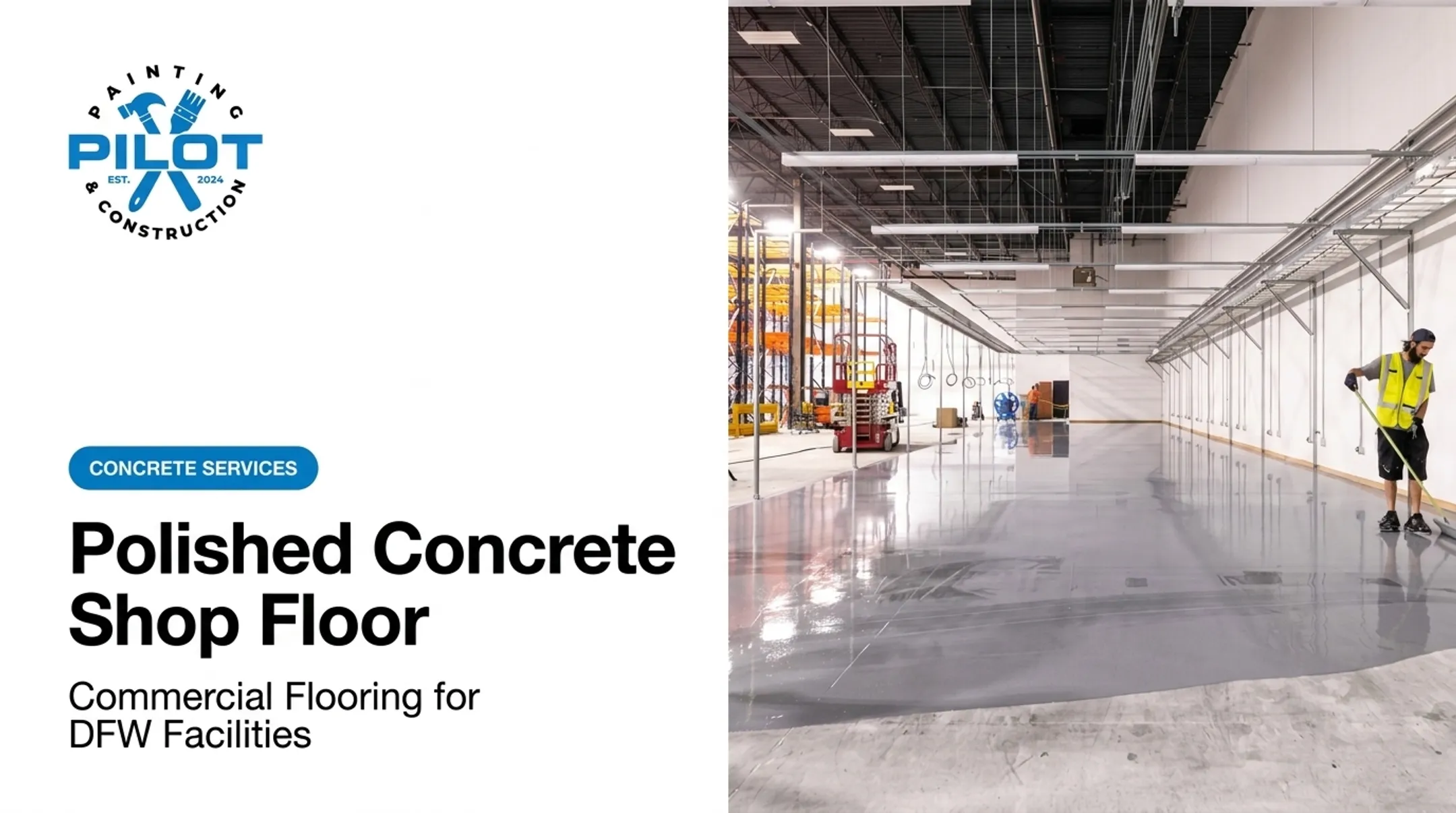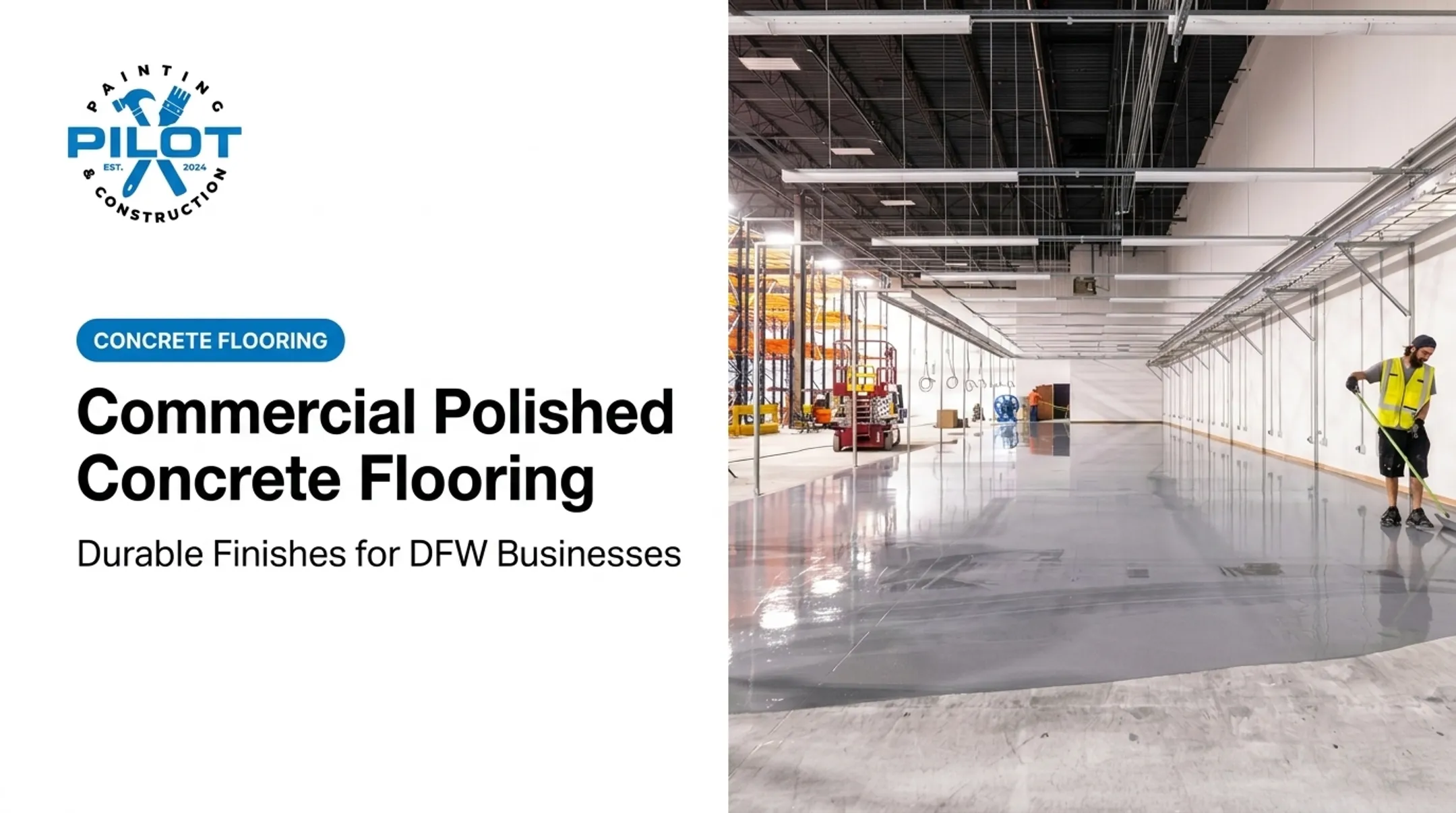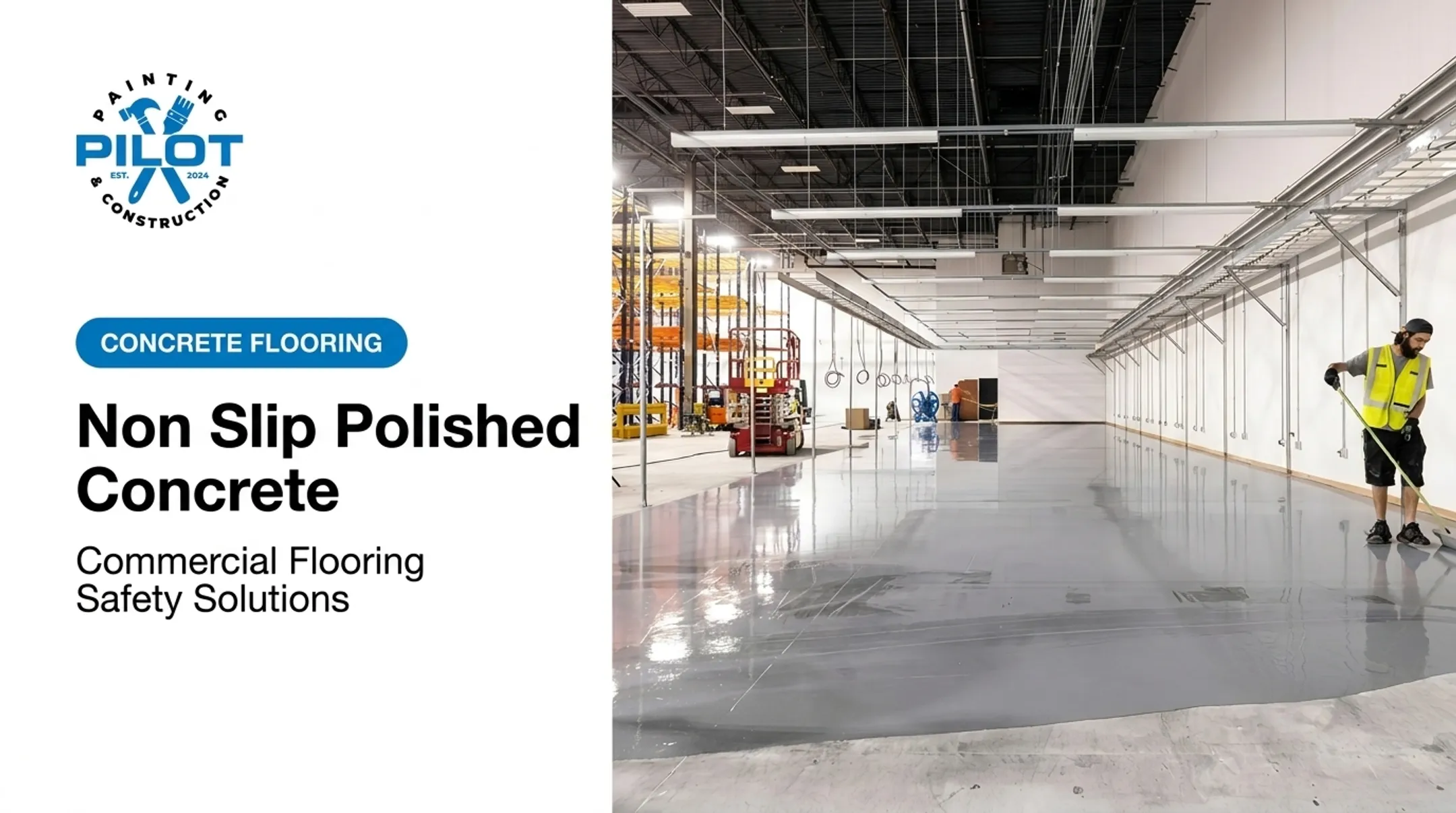

But many business owners still have questions. Is it expensive? Will it hold up in a busy warehouse? Is it too slippery for a restaurant kitchen?
This guide breaks down what polished concrete actually is, how contractors install it, what it costs, and how to decide if it's right for your property.
Key Takeaways
- Polished concrete is the existing slab ground and densified—not a coating—so it stays durable and low-maintenance
- Price hinges on aggregate exposure, slab condition, and the gloss level you want
- Strong fit for offices, retail, and industrial floors; poor fit for heavy chemicals or frequent wet washdowns
- Get a professional slab evaluation before you commit to polishing
What Is Polished Concrete Flooring?
Polished concrete isn't paint, epoxy, or a sealant sitting on top of your slab. According to the Concrete Polishing Association of America, it's a multi-step process of mechanically grinding, honing, and polishing the existing concrete with bonded abrasives to reach a specified finish. The CPAA's official definition makes clear this is a transformation of the slab itself, not something applied to it.
That distinction matters. A coating can peel, chip, or wear thin. A polished slab simply is the floor.
Understanding Aggregate Exposure Classes
The look of your finished floor depends heavily on how much aggregate gets exposed during grinding. The American Society of Concrete Contractors' Concrete Polishing Council maintains a current exposure chart with three classes:
- Class A (Cement Fines): 85-95% cement fines, 5-15% fine aggregate — creates a smooth, cream-toned finish
- Class B (Fine Aggregate): 85-95% fine aggregate — the classic "salt-and-pepper" look
- Class C (Full Aggregate Exposure): 80-90% full aggregate exposure — a bold, terrazzo-like appearance with visible stone

Some older industry references mention a fourth "Class D" for large aggregate exposure, but that category no longer appears on the current CPC standard.
Both new pours and many existing slabs can be polished, provided the concrete is structurally sound. A cracked, spalled, or poorly poured slab needs repair first.
The Polished Concrete Process: How It's Done
Getting from raw concrete to a glossy, reflective floor takes real technical skill and specialized equipment. Here's the general sequence:
- Surface prep and repair — Crack filling, joint treatment, and coating removal set the foundation. Skipping this step shows up later as flaws in the final sheen.
- Progressive diamond grinding — Coarse grits cut down the surface first, followed by medium and fine grits. The grit level chosen determines how much aggregate gets exposed.
- Densification — Around the 200-grit stage, a lithium, sodium, or potassium silicate solution reacts with calcium hydroxide to harden the slab and cut dusting.
- Final polishing — Finer grits build the target sheen. Color, when used, is typically applied around 400 grit before final densification so the stain can penetrate.
- Optional finishing touches — Stains, dyes, or anti-slip treatments can be added depending on the space's use.
This isn't a weekend DIY project. It requires professional-grade grinders, the right sequence of diamond tooling, and knowledge of how each slab reacts to chemicals and grit changes.

Pilot Painting & Construction handles polished concrete within its commercial Floor & Concrete services for offices, industrial spaces, retail stores, and restaurants across Pilot Point and the greater DFW area—focused on durable floors that hold up in heavy-use environments.
Cost of Polished Concrete Floors
Pricing varies more than most people expect. According to Concrete Network's cost breakdown, polished concrete on existing slabs typically runs $3 to $12 per square foot, depending on complexity:
| Finish Level | Approximate Cost |
|---|---|
| Basic (Class A, minimal repair) | $3-$5/sq. ft. |
| Mid-range (Class B, some decorative work) | $5-$8/sq. ft. |
| High-end (Class C, extensive decorative elements) | $8-$12+/sq. ft. |
What drives the price:
- Existing slab condition and amount of repair needed
- Number of grinding passes and gloss level chosen
- Room size and edge count (small spaces often cost more per sq. ft.)
- Color, dye, or decorative additions
- Removal of old flooring, glue, or thinset
Extensive prep work can add roughly $2/sq. ft., and raised subfloors requiring waterproofing may add another $2-$3/sq. ft.
Maintenance changes the long-term math. Unlike tile that needs grout work or epoxy that eventually needs recoating, polished concrete has no topical layer to wear out.
Concrete Decor's trade data puts average annual maintenance at roughly $0.75/sq. ft., mostly dust mopping and occasional neutral-pH cleaning. Over 10–20 years, that lower upkeep can offset a higher upfront cost.

Is Polished Concrete Worth It? Benefits and Drawbacks
For most commercial spaces, polished concrete is worth it when you want a durable, low-upkeep floor and your slab is in decent shape. The finish still has trade-offs, so match the benefits below to how the space is actually used.
Benefits of Polished Concrete
- Exceptional durability: Since the floor is the concrete, there's no coating to chip, peel, or scratch through
- Low maintenance: Dust mopping and occasional neutral-pH wet mopping replace waxing and stripping
- Light reflectivity: A glossy surface brightens industrial and retail spaces naturally
- Design flexibility: Finishes range from subtle cream tones to bold, stone-flecked terrazzo looks
Those upsides hold when traffic, cleaning routines, and slab condition line up with the finish. These are the limitations that most often change the decision.
Drawbacks to Consider
- Slip risk when wet: Without anti-slip additives, polished concrete can be slick, especially in entryways or kitchens
- Heavy chemical exposure: Frequent hot washdowns or harsh chemicals can dull long-term appearance
- Slab quality dependency: A heavily damaged or low-quality existing slab may not polish evenly, even with skilled repair work
Industry testing from the Concrete Polishing Council found that properly polished floors exceeded standard wet-slip-resistance benchmarks in controlled tests, though results varied by gloss level more than by the stone mix exposed in the surface. Discuss finish level and slip resistance with your contractor upfront, especially for restaurant kitchens or entry zones.
Polished Concrete vs. Other Flooring Options
Cost, maintenance, and traffic wear usually decide the choice between polished concrete, tile, and epoxy.
| Factor | Polished Concrete | Ceramic Tile | Epoxy Coating |
|---|---|---|---|
| Installed cost | Often stronger long-term value | About $12–$45 per sq ft | Mid-range; recoats add cost |
| Maintenance | No grout; simple cleaning | Grout sealing and scrubbing | Surface care; periodic recoat |
| High-traffic wear | Finish is the slab itself | Durable surface; grout fails first | Can peel, chip, or wear through |
| Recoat cycle | Low | Grout upkeep over time | More likely as traffic rises |
Ceramic tile usually costs more upfront once installation is included, and grout lines need periodic sealing and cleaning. Polished concrete skips grout entirely and, according to Concrete Network's comparison chart, rates "Excellent" for maintenance ease and long-term performance.
Epoxy sits on top of the concrete rather than becoming part of it, so it can peel, chip, or wear through in busy zones and need recoating. Polished concrete is the slab itself, so it does not carry that same recoat risk.

For DFW property owners comparing these finishes, Pilot Painting & Construction's flooring and concrete services can match the right option to your space, traffic level, and budget.
Choosing the Right Contractor for Your Project
Not every contractor who says they "do concrete" has real polishing experience. This is a technical process, and mistakes are hard to undo once grinding starts.
Look for a contractor who:
- Has a demonstrated track record assessing slabs before quoting a project
- Communicates clearly about timelines, repair needs, and realistic finish expectations
- Will tell you honestly if polished concrete isn't the right fit for your space
- Separates repair costs, gloss level, and square footage clearly in their quote
Those same standards guide how Pilot Painting & Construction handles polished concrete work in Pilot Point and the greater DFW area. The team serves offices, industrial spaces, retail stores, and restaurants with concrete, flooring, and construction services.
Founder Aaron Stavinoha built the business around clear communication and transparency at every stage, so repair needs, gloss level, and costs stay visible before grinding starts. Clients such as International Capital have noted strong crew performance on project work.
Frequently Asked Questions
How much does it cost to do polished concrete floors?
Cost depends on aggregate exposure level, existing slab condition, and desired gloss, generally ranging from $3-$12 per square foot. Getting a local quote is the best way to nail down an accurate number for your space.
Can concrete floors be polished?
Most concrete floors can be polished if the slab is structurally sound. Damaged, cracked, or low-quality slabs typically need repair or resurfacing before polishing can begin.
What is the typical lifespan of polished concrete floors?
Because polished concrete is the slab itself rather than a coating, it can last for the lifetime of the building with proper care. Actual performance still depends on slab quality, traffic, and maintenance.
Is tile cheaper than polished concrete?
Tile often costs more upfront, especially once installation and grout work are factored in. Polished concrete tends to cost less over the long run thanks to lower maintenance needs.
Is polishing concrete floors worth it?
For most commercial spaces, yes — the durability and low maintenance often outweigh the upfront cost. It's less ideal for spaces with heavy chemical exposure or frequent wet washdowns.
What does a polished concrete floor look like?
It's a glossy, reflective surface that ranges from a uniform cream tone to a stone-flecked, terrazzo-style appearance, depending on the aggregate exposure class chosen.
Ready to talk through whether polished concrete fits your property? Reach Pilot Painting & Construction at 940-286-3838 or aaron@pilotpaintingco.com for a project quote.