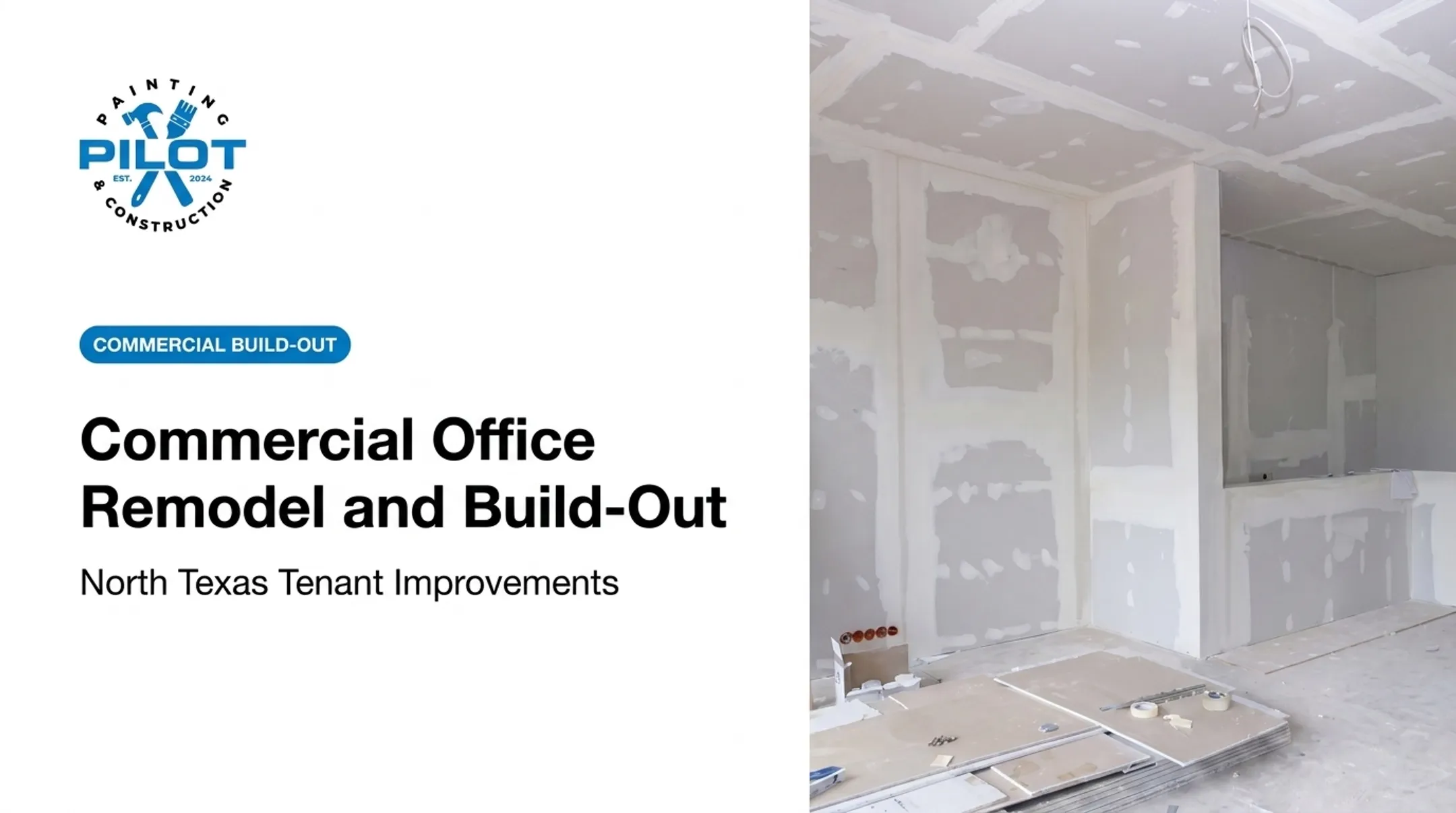

Most North Texas business owners face the same three headaches when it's time to repaint: how to avoid shutting down operations, which finishes hold up to daily wear, and what colors actually work for their space. This guide covers color strategy, scheduling, paint selection, realistic costs, and how a contractor like Pilot Painting & Construction approaches office projects across the DFW area.
Key Takeaways
- Choose colors and finishes that support brand, productivity, and durability—not looks alone
- Phased or after-hours scheduling keeps most offices fully operational during painting
- Eggshell or satin finishes offer the best mix of washability and appearance for walls
- Costs typically run $2–$6 per square foot of paintable area, depending on prep and paint grade
- Always request an itemized quote before signing off on any project
Choosing the Right Colors for Your Office Space
The 80/20 Approach
A useful starting point: roughly 80% neutral base tones (grays, whites, warm beiges) paired with 20% bolder accent colors for branding or energy. This mirrors the broader 60/30/10 design principle used in commercial spaces, where neutral walls act as a backdrop for a dominant color, a secondary tone, and a small accent allocation.
Treat these ratios as a guide, not a rulebook. The right split depends on your space and how it's used.
What Color Psychology Actually Tells Us
Color research on office environments is more nuanced than most paint blogs suggest. Controlled studies found that blue supported difficult detail-oriented and creative tasks. An immersive workspace experiment found yellow and blue produced more positive mood than green, while productivity under green lagged behind red, blue, and yellow.
Practical takeaways:
- Blues and greens — solid options for focus areas and analyst zones
- Yellows and oranges — better suited to collaboration spaces where energy matters
- Calming neutrals — safest choice for client-facing lobbies and reception areas

None of this is a guarantee. Task type, lighting, and room use all shape the result, so treat these as informed starting points rather than promises.
Test Before You Commit
Paint chips look different under office lighting than they do in a showroom or on your phone screen. Before you lock in a color:
- Order large samples
- Paint a section of actual wall
- Check it morning, afternoon, and under your overhead lights
Match the Palette to the Business
- Tech startups — bolder accents, exposed brick or dark trim paired with bright collaboration zones
- Law firms — deep neutrals, navy, or forest green accents that signal stability
- Retail offices — brand colors front and center, especially at entry points
Planning Your Project to Minimize Business Disruption
You don't need to close your doors to repaint your office. Federal guidance on occupied-space renovation recommends scheduling paint work after hours, phasing projects by zone, and separating active work areas from finished spaces with temporary barriers.
This same logic applies whether you're managing a federal building or a 1,500-square-foot office suite in Frisco.
A workable plan looks like this:
- Map your zones — identify which rooms can close for a day versus which need to stay operational
- Schedule odor-heavy work after hours or on weekends — sanding, priming, and spraying happen when the office is empty
- Communicate clearly with staff — send timelines and mark off-limit areas so nobody wanders into wet paint or trips over equipment
- Protect furniture and electronics — cover or relocate items before crews arrive
- Consider remote work for heavier phases — even one or two days can eliminate most friction

Pilot Painting & Construction plans commercial interior painting around that same approach: keep operations running while work moves zone by zone in occupied offices.
Client Michael Brashears of International Capital noted the difference clear communication makes, saying the crew "has done a great job" and that project lead Terra "has been on top of the job since day 1."
Surface Preparation and Paint Selection for Long-Lasting Results
Prep Work Isn't Optional
Skipping prep is the fastest way to get a paint job that peels within a year. Proper prep includes:
- Cleaning surfaces thoroughly
- Patching holes and cracks
- Sanding rough spots
- Dulling glossy areas so new paint bonds Primer matters most over dark colors or uneven textures. It evens out absorption and helps the topcoat go on smoother with fewer coats.
Picking the Right Sheen
| Finish | Best For | Why |
|---|---|---|
| Eggshell/Satin | Office walls | Washable, low-glare, hides minor imperfections |
| Semi-gloss | Trim, doors, wet areas | Wipes clean easily, handles heavy contact |
| Flat/Matte | Ceilings, uneven walls | Hides flaws but scuffs more easily |

Why Low-VOC Matters for Occupied Spaces
The EPA notes that paints release organic compounds that can affect indoor air quality, sometimes at higher concentrations indoors than outdoors. Low-VOC and zero-VOC formulas reduce odor and health concerns in occupied offices, but "zero VOC" claims can change once a product is tinted. Ask any contractor to confirm the exact product and tint formula, not just the marketing label. Air quality is only half the equation in a working office. Professional-grade washable coatings also cut down on touch-ups in high-traffic hallways and conference rooms, saving money over the life of the paint job.
What Does It Cost to Paint an Office Space?
Commercial interior painting for a 1,000 square foot office typically costs $2,000 to $6,000, or about $2–$6 per square foot as a common benchmark.
Regional Texas estimates often land a bit lower, around $1.50 to $4.00 per square foot, though figures vary by scope and how "square footage" is measured.
Key cost factors:
- Total paintable wall and ceiling area (not just floor space)
- Ceiling height and access requirements (lifts or scaffolding add cost)
- Number of colors and coats needed
- Amount of surface prep and repair required
- Paint grade and specialty coatings (low-VOC, high-durability)
- After-hours or weekend labor premiums
Get itemized quotes that break down labor, materials, and prep separately. A lower bid with vague line items often costs more once change orders start.

Why Hire Professional Commercial Painters
Office painting isn't a weekend DIY project. Professional commercial painters handle the details that keep occupied buildings safe and operations on track:
- Manage project logistics and sequencing across work areas
- Coordinate crews around your business hours
- Address safety and compliance requirements for occupied spaces
Pilot Painting & Construction brings a commercial construction background to every office project. Founder Aaron Stavinoha spent years running commercial construction businesses before starting Pilot. That experience shapes project management around transparency and clear communication.
Beyond painting, Pilot handles related work that often comes up during office upgrades:
- Commercial drywall repair, from minor damage to full restoration
- Tenant improvement work that adapts spaces to business needs while addressing compliance
- Whitebox remodeling for rental units
- Commercial flooring, floor coatings, and concrete repair
Having one contractor handle painting alongside these related services means fewer handoffs, fewer scheduling conflicts, and one point of contact for the whole project.
Frequently Asked Questions
What is the 80/20 rule in office painting?
The 80/20 rule pairs roughly 80% neutral wall colors (grays, whites, beiges) with 20% bolder accent colors for branding or energy in select areas. Treat it as a starting point, not a fixed formula.
What colors are good for painting an office space?
Neutral bases work well throughout. Use blues and greens in focus areas, yellows or oranges in collaboration spaces, and branded accents in reception or client-facing zones.
How much does it cost to paint 1,000 sq ft of office space?
Expect $2,000 to $6,000 based on typical commercial rates of $2-$6 per square foot of paintable area. Prep work, paint grade, and access needs push costs higher or lower.
How often should an office be repainted?
Most offices need repainting every five to seven years, though high-traffic zones like lobbies and hallways may need attention sooner.
Can office painting be done without closing the business?
Yes. Phased scheduling and after-hours work let painters complete projects zone by zone while your office stays operational.
What paint finish is best for office walls?
Eggshell or satin finishes work best for walls thanks to their washability and low glare. Semi-gloss is better reserved for trim and doors.