
A commercial painter is a specialized contractor trained to work on offices, retail spaces, restaurants, and industrial facilities—buildings that demand different equipment, materials, and scheduling than a house down the street. This guide covers what these professionals actually do, what they charge, and how to pick one that won't disrupt your operations.
Key Takeaways
- Match coatings to the space: offices, retail, restaurants, industrial, and multi-family each need different systems
- Budget by square footage, surface condition, coating type, and complexity—not a single flat rate
- Vet licensing, insurance, portfolio, and communication style before you sign
- Schedule work to limit downtime; disruption control is unique to commercial jobs
What Is a Commercial Painter?
A commercial painter finishes and maintains large-scale buildings: office parks, retail centers, restaurants, warehouses, and industrial facilities. The job goes far beyond rolling paint on a wall.
Scale and complexity separate commercial from residential work. A house might need two people and a weekend. A commercial building often requires crews, aerial lifts, and coordination with property management, tenants, and sometimes regulatory inspectors.
Equipment needs also shift dramatically:
- Industrial sprayers for large surface areas
- Scaffolding and aerial lifts for multi-story exteriors
- Specialty coatings for high-traffic floors or fire-rated assemblies
- Safety gear and access planning for elevated or occupied spaces
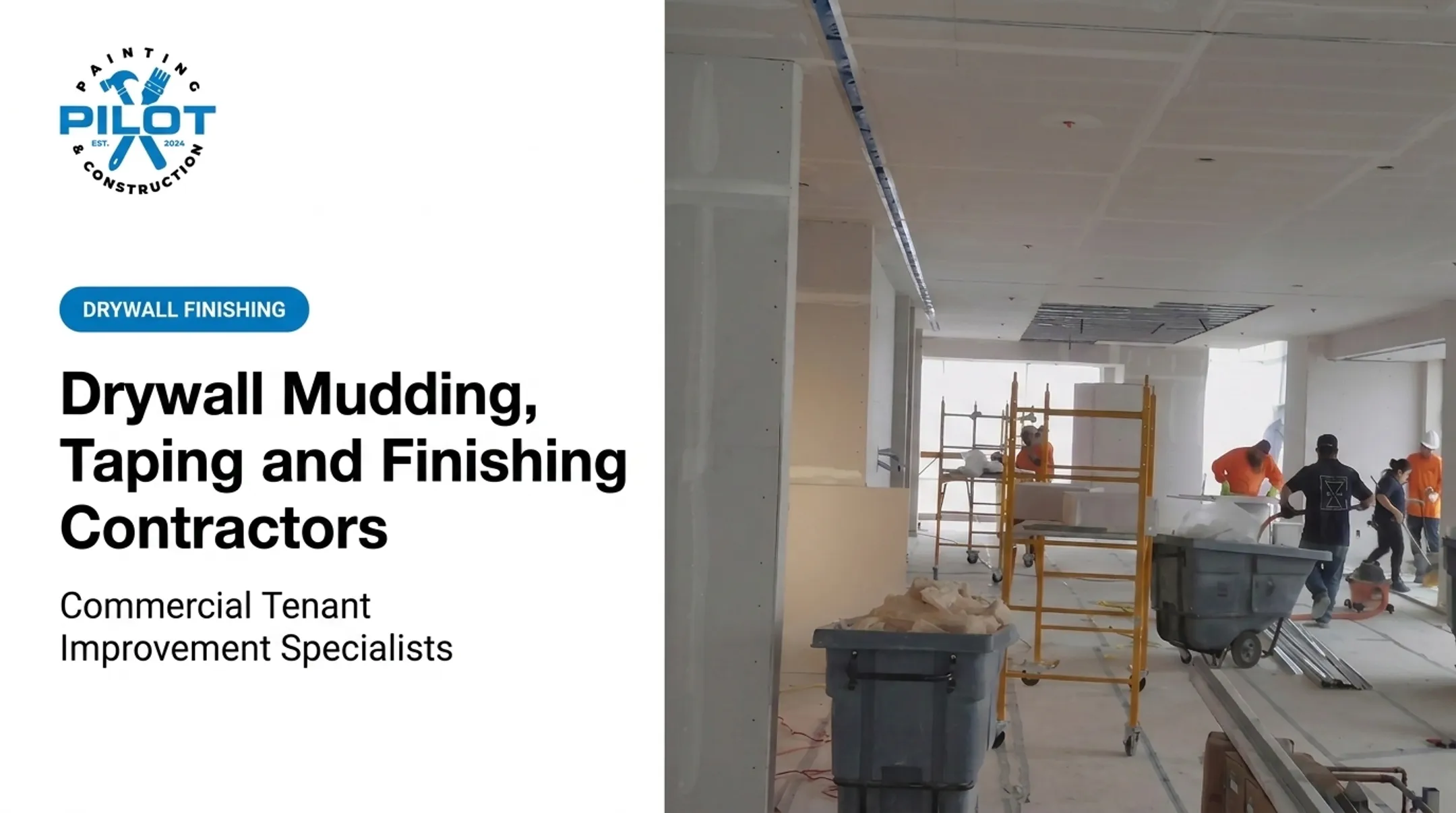
Many commercial painters come from broader construction backgrounds, not just painting. Pilot Painting & Construction's founder, Aaron Stavinoha, spent years running commercial construction companies before launching the family business. That experience shapes how the team approaches surface prep, drywall, and tenant-ready finishes, not just color application.

Types of Commercial Painting Services
Commercial painting typically covers:
- Interior and exterior painting for offices, retail, restaurants, and industrial spaces
- Tenant improvements that adapt spaces to new business requirements
- Floor coatings and industrial flooring, including polished concrete
- Concrete repair and parking lot striping, often ADA-compliant
Many contractors, including Pilot Painting & Construction, bundle painting with renovation, drywall, and construction services. That means one contractor can handle a whitebox remodel, tenant build-out, and final paint job instead of juggling three separate vendors.
What Does a Commercial Painter Actually Do?
The work follows a general arc: assess the site, prep the surface, prime, apply the coating, and inspect the finish. But the details matter more than the outline.
Surface Prep Determines Everything
Skipping or rushing prep is the single biggest cause of coating failure. According to the Association for Materials Protection and Performance (AMPP), 2024, 75% of coating failures trace back to poor surface preparation, with floor-coating failures running even higher at roughly 80%.
Proper prep includes:
- Power washing to remove dirt, chalking, and mildew
- Scraping and sanding old, failing paint
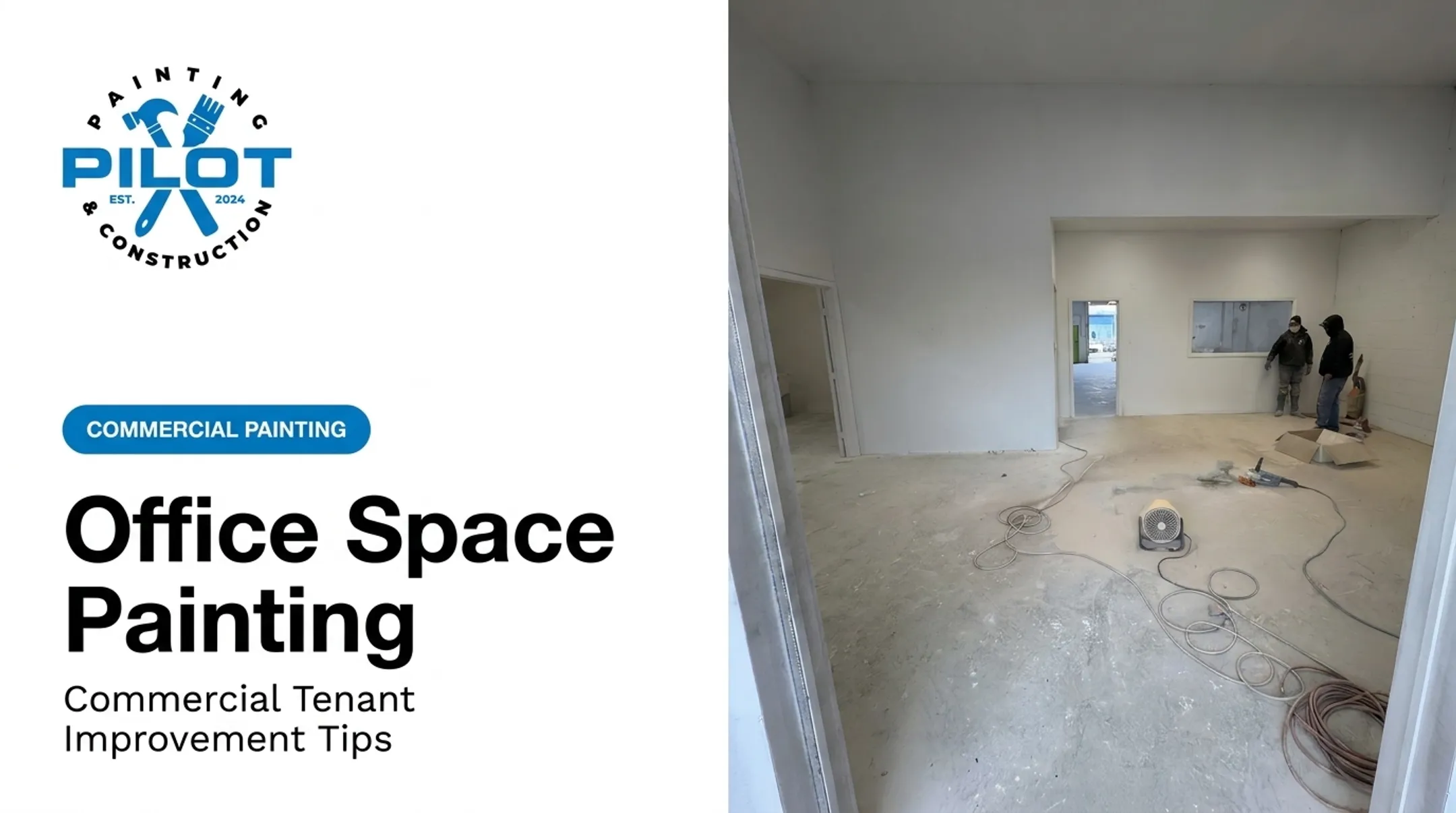
- Patching cracks, holes, and damaged drywall
- Masking windows, trim, and fixtures
Skip these steps, and even premium paint peels within a season.

Equipment and Scheduling
Once prep standards are set, commercial jobs still need the right tools and a schedule that protects business operations.
Typical commercial equipment includes:
- Airless sprayers for large wall and ceiling coverage
- Rolling scaffolds and aerial lifts for elevated work
- Floor grinders for concrete surface prep
Exterior walls over 15 feet usually mean rented lifts or full scaffolding.
Scheduling is where commercial work diverges most from residential. Businesses can't just shut down for a week. Reputable contractors phase work around operating hours, sometimes shifting to nights or weekends so retail floors, offices, and restaurants stay open.
Pilot Painting & Construction builds this phasing into tenant-improvement and interior projects to keep disruption low for DFW-area businesses.
What Does a Commercial Painter Charge?
Pricing depends on several moving parts, and no two buildings quote the same.
Main Cost Factors
- Square footage and paintable surface area (wall height × length, minus doors/windows)
- Surface condition — heavily weathered or damaged surfaces need more prep
- Coating type — standard acrylic versus epoxy or fire-retardant systems
- Building height and accessibility — anything above 15 feet often needs lift or scaffold rental
- Project complexity — tenant improvements, drywall repair, or floor coatings layered into the scope

Typical Pricing Ranges
For reference, HomeAdvisor's 2026 commercial benchmark puts commercial exterior painting between $5,500 and $18,500, averaging around $12,000 nationally. That breaks down to roughly $2 to $6 per square foot of paintable surface, or $50 to $100 per hour.
Commercial interior work has no equally reliable national benchmark. Ceiling height, occupancy, and coat count change the number on every building, so a written scope beats a rough estimate.
Additional Cost Drivers
Some jobs carry extra line items:
- Specialty coatings — epoxy floors or fire-retardant systems for steel structures require separate quoting due to thickness and cure-time requirements
- Lead paint considerations — buildings constructed before 1978, particularly child-occupied facilities, may fall under EPA's Renovation, Repair, and Painting Rule
- Multi-story access — lift and scaffold rental adds labor and equipment costs
Get multiple detailed quotes. The cheapest bid often skips prep steps or uses lower-grade materials. Compare what's included, not just the total number.
Ask for itemized estimates that separate labor, materials, and prep so you can compare value, not just totals.
How to Choose a Commercial Painter
Picking the wrong contractor costs more than money. It costs time, tenant goodwill, and rework.
Verify Credentials First
- Confirm licensing: requirements vary by state; some states have specific painting-contractor classifications
- Check insurance: request a current certificate covering general liability and workers' compensation
- Ask about certifications: relevant for lead-safe work or specialty coating systems
Review Portfolio and References
Ask for examples from properties similar to yours: office, retail, restaurant, or industrial. A contractor experienced in one vertical doesn't automatically translate to another; industrial flooring and retail interiors have very different demands.

Prioritize Communication
Property owners consistently cite poor communication as the top frustration with contractors. Look for a company that provides regular updates, not just a start date and a final invoice.
Contractors with broader construction backgrounds tend to solve problems faster. If a wall turns out to have drywall damage under old paint, a painter-only crew stops and calls someone else. A crew with construction experience handles it on the spot.
Pilot Painting & Construction is built around that model: a family-run team with commercial construction roots, clear communication, and project plans that keep disruption low across the DFW area. One client, Michael Brashears of International Capital, put it simply: "Your crew has done a great job! Terra has been on top of the job since day 1!"
Before you sign, lock down the practical details:
- Warranty coverage on workmanship and materials
- Estimated project timeline and how it accounts for business hours
- How change orders or unexpected repairs get handled
Signs You Need a Commercial Painting Project
Common triggers for a repaint or refresh include:
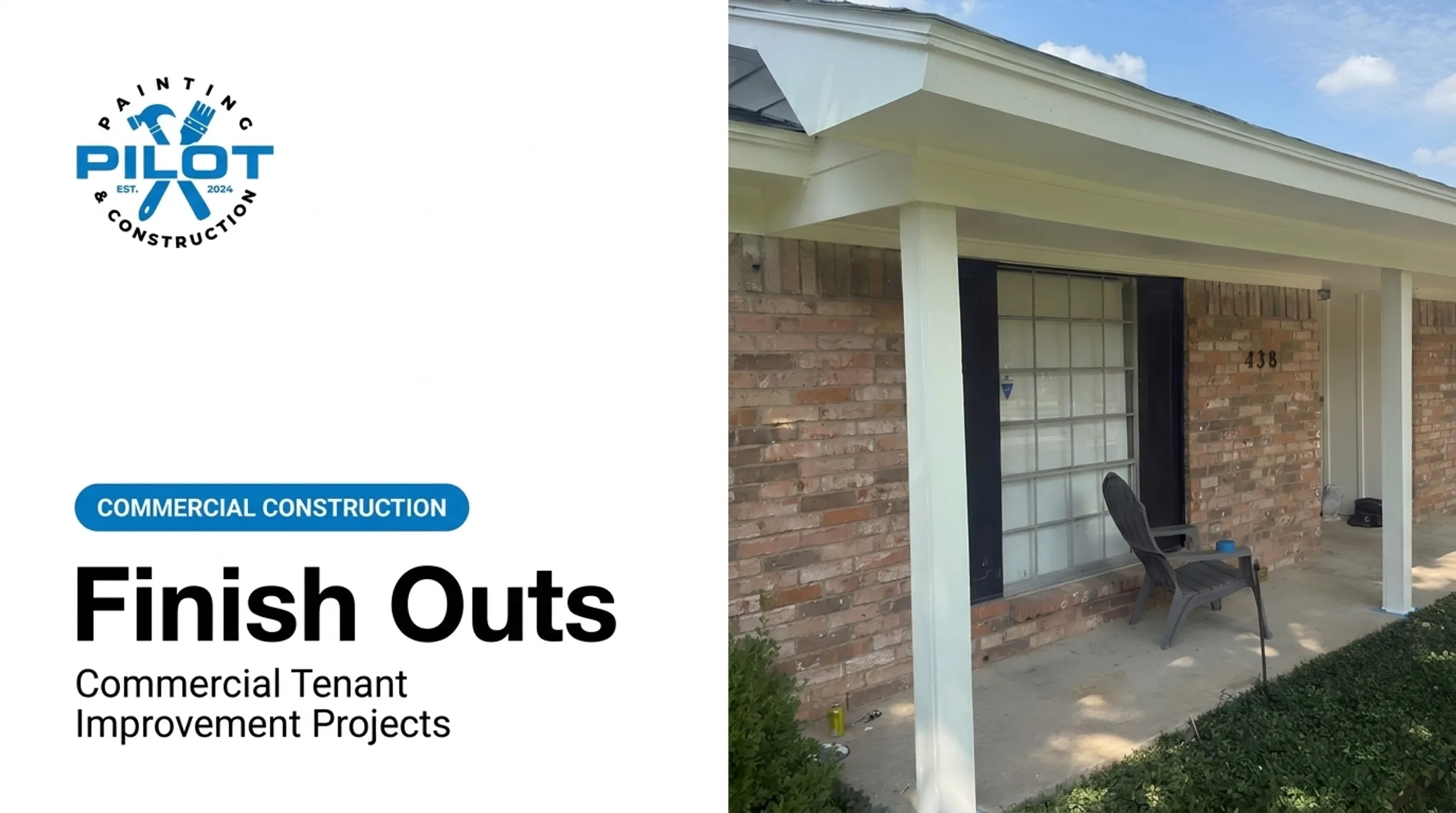
- Fading, chalking, or peeling exterior paint
- Tenant turnover requiring updated, move-in-ready interiors
- A brand refresh or rebrand needing new colors and finishes
- New facility openings requiring a polished first impression
- Faded parking lot striping or worn ADA-compliant markings
Regular maintenance painting protects building materials from weather damage and extends the life of exterior surfaces. Manufacturers often require an exterior recoat every 2-3 years just to keep warranty coverage active, according to AMPP's 2024 coatings maintenance report.
Parking lot striping deserves the same attention. Worn lines create safety and traffic-flow problems, so many owners bundle restriping with an exterior repaint for a full property refresh.
Frequently Asked Questions
What do commercial painters charge?
Costs depend on square footage, surface condition, and coating type, with commercial exteriors often ranging from $5,500 to $18,500. Final pricing needs a walkthrough so prep, access, and coating systems are scoped to your building.
How do I choose a commercial painter?
Verify licensing and insurance, review portfolio work from similar property types, and check references. Communication style matters just as much as price.
What is a commercial painter?
A commercial painter finishes large-scale buildings like offices, retail stores, and industrial facilities. Unlike residential painters, they work with specialized equipment, coatings, and scheduling around business operations.
How long does a typical commercial painting project take?
Most commercial jobs take several days to a few weeks, depending on building size, surface condition, and whether work runs after hours. Multi-phase or multi-building scopes take longer than a single-area refresh.
Can commercial painting be done without closing my business?
Yes. Contractors often phase work or schedule it during off-hours, nights, or weekends to keep normal operations running throughout the project.
What surfaces require special coatings in commercial buildings?
Industrial floors often need epoxy coatings for durability, while structural steel may require fire-retardant systems. Both require different application methods than standard wall paint.