
Many business owners struggle with three things: minimizing operational disruption, pinning down realistic costs, and figuring out how much work the project actually needs. National nonresidential construction spending hit $755.2 billion on a seasonally adjusted annual basis in mid-2026, according to U.S. Census Bureau data — proof that commercial building activity remains a massive, active market.
This guide breaks down definitions, cost factors, decision criteria, and how to choose the right contractor for your North Texas project.
Key Takeaways
- New construction builds from the ground up; renovation upgrades what's already there
- Cost, timeline, and business disruption drive most renovate-vs-rebuild decisions
- Offices, retail, restaurants, and industrial spaces each carry different scope and code needs
- Working with an experienced local contractor lowers risk and keeps timelines realistic
What Is Commercial Construction and Renovation?
Commercial construction means building a new structure from the ground up: offices, retail centers, restaurants, warehouses, or industrial facilities. It starts with raw land or a cleared lot and ends with a finished, code-compliant building.
Commercial renovation means updating, repairing, or modernizing a space that already exists. That could mean fresh finishes, an updated layout, or full system replacements inside four walls that stay standing.
Renovation vs. Remodeling vs. New Construction
These terms get used interchangeably, but they're not the same:
- Renovation — targeted, cosmetic-to-moderate improvements (paint, flooring, fixtures)
- Remodeling — structural or layout changes (moving walls, reconfiguring rooms)
- New construction — a ground-up build on a new or cleared site
Code frameworks reflect this distinction. The International Existing Building Code covers repair, alteration, addition, and change of occupancy for structures already standing. The International Building Code governs new commercial construction, including occupancy classification, fire and smoke protection, accessibility, and structural design.
Commercial projects also differ from residential work in scope and stakes:
- Code requirements are stricter
- ADA compliance applies throughout the project
- Businesses often must stay operational during the work, unlike a homeowner who can live around a renovation
Examples of Commercial Construction and Renovation Projects
New construction examples:
- Office buildings and corporate campuses
- Retail centers and standalone stores
- Restaurants and quick-service locations
- Warehouses and industrial facilities
Renovation and tenant improvement examples:
- Interior painting and finish updates
- Flooring replacement, floor coatings, and polished concrete
- Parking lot striping and asphalt repair
- Fencing and security upgrades
- Layout modernization and drywall repair
Tenant Improvements: Fitting Space to the Business
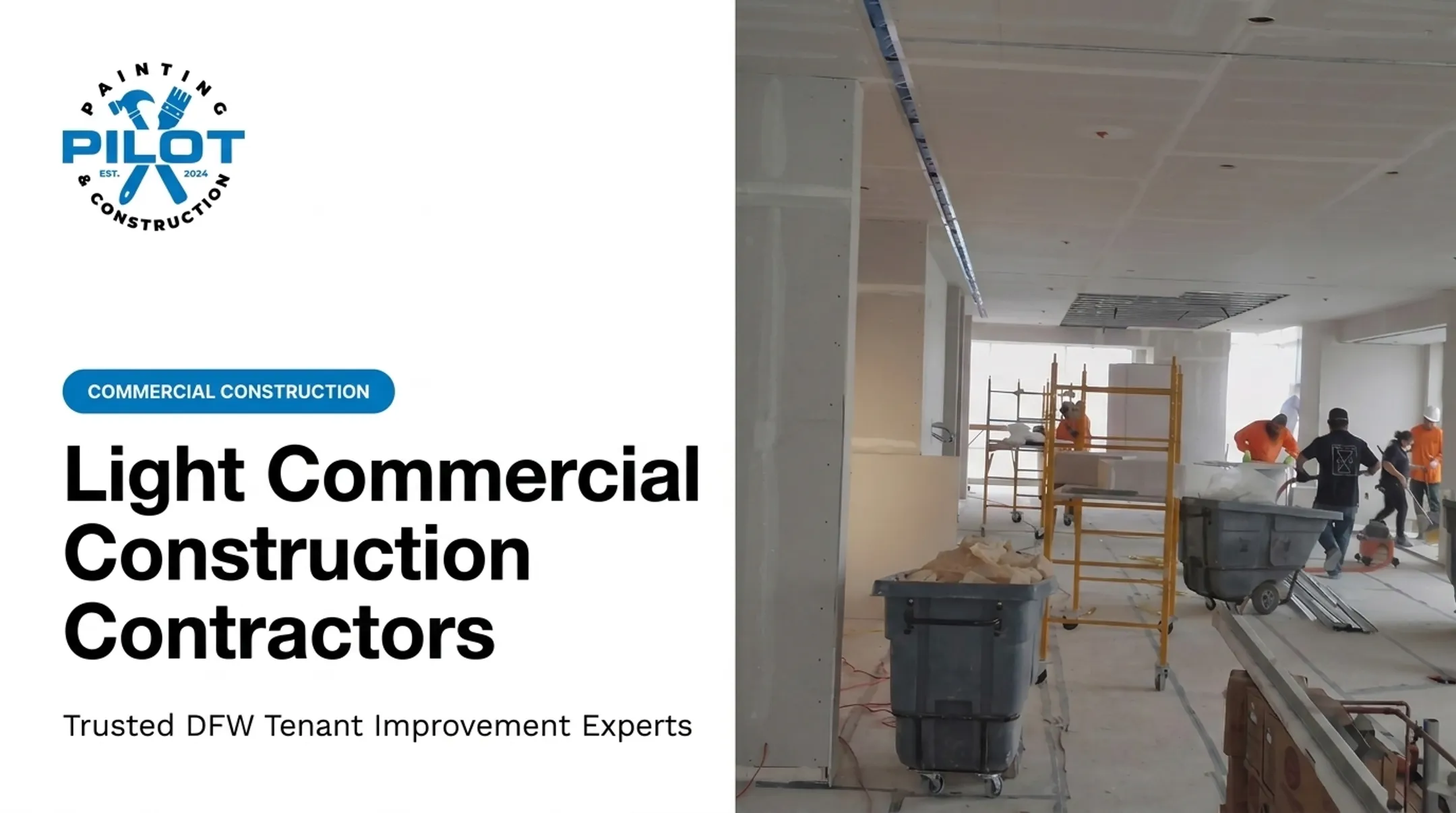
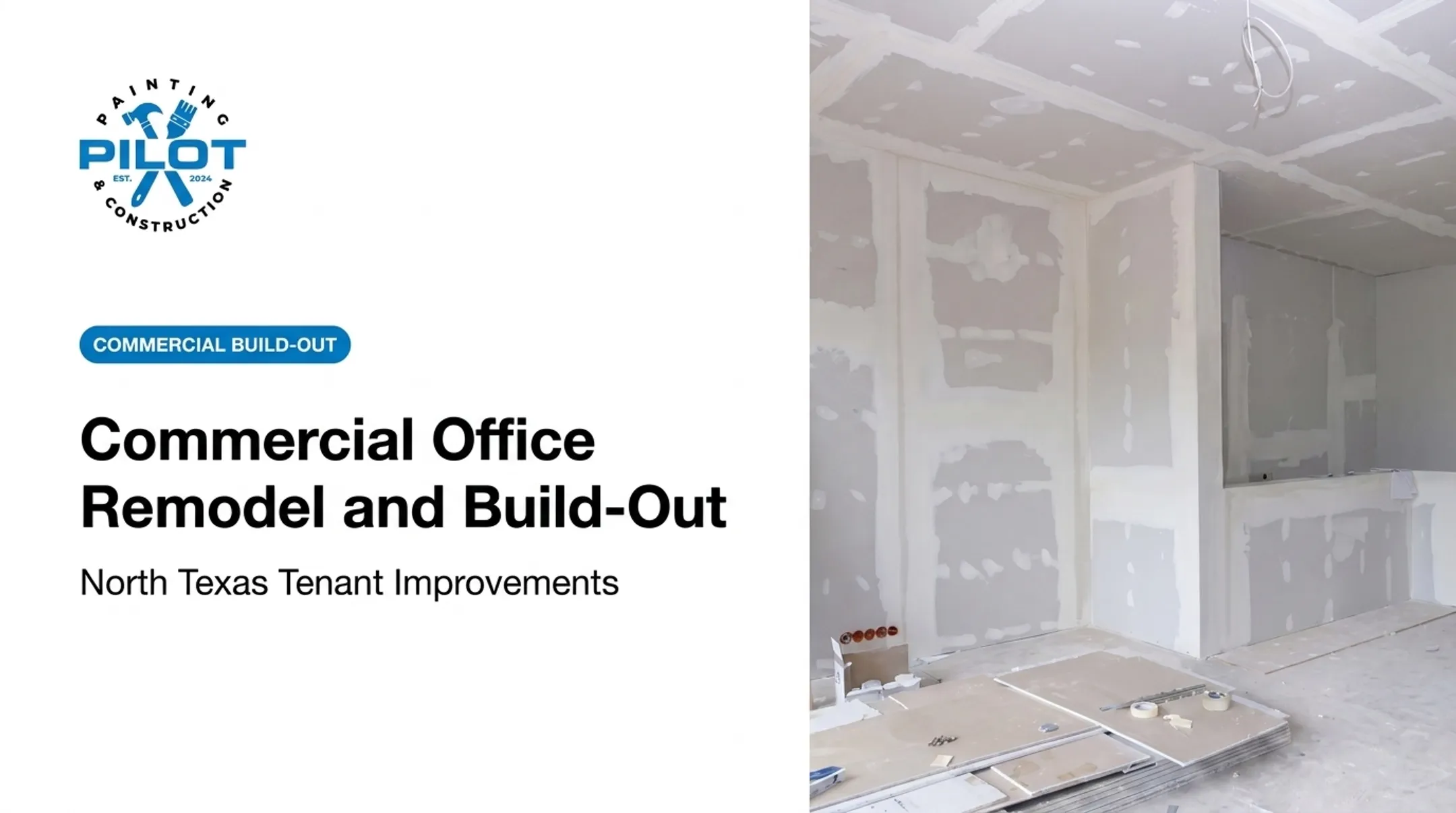
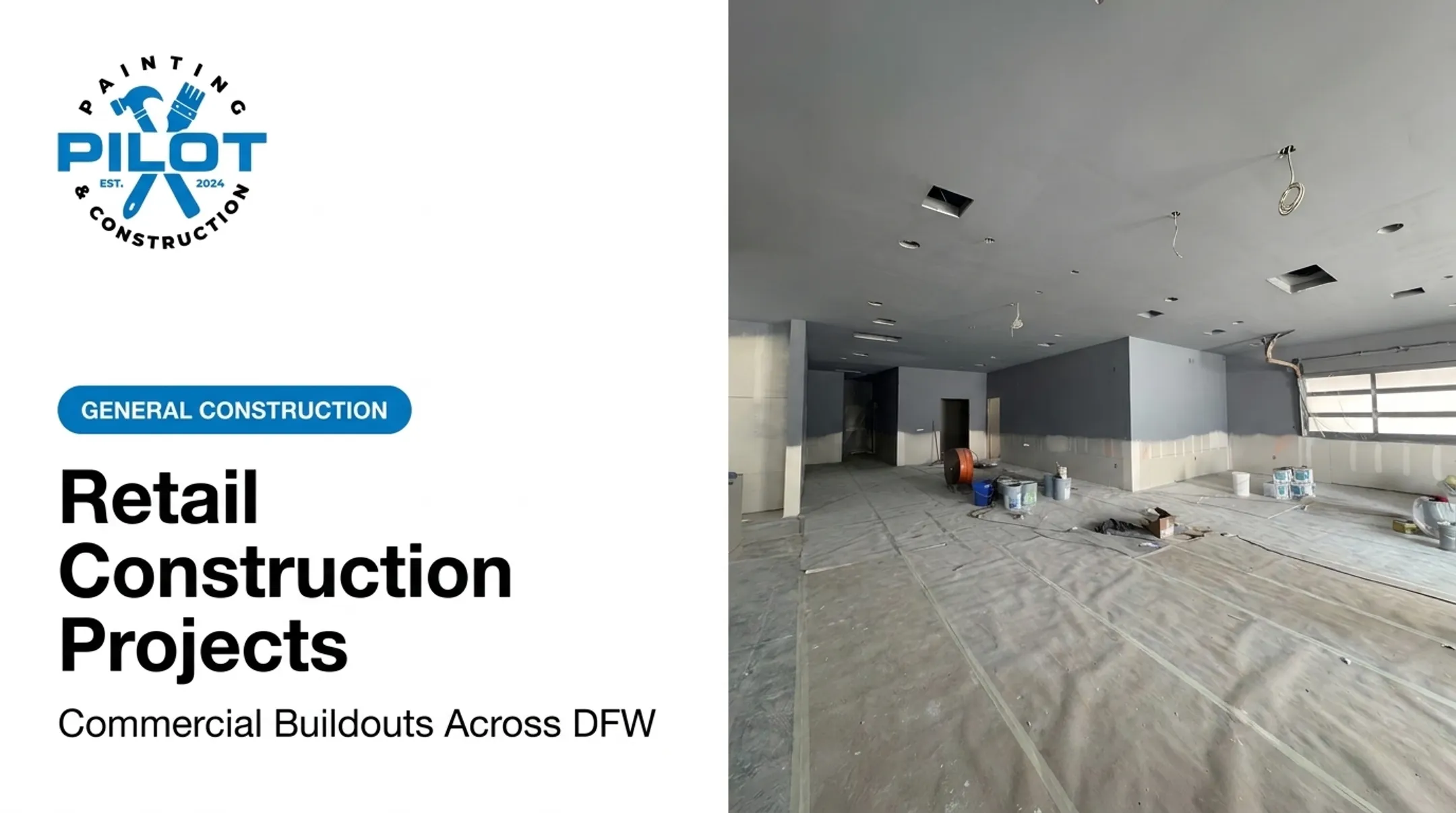
Tenant improvements are renovations businesses request when leasing or repositioning a space to fit their specific needs. Pilot Painting & Construction handles this through whitebox remodels: stripping outdated finishes and upgrading essential systems so a space is ready for a new tenant's buildout, whether an office, retail store, or restaurant.
Exterior work often shapes the first impression. Parking lot crack filling, seal coating, and ADA-compliant traffic striping improve safety and curb appeal before a customer walks in the door.
Renovate or Build New? Key Decision Factors
This is the question most property owners actually need answered. Here's how the two options stack up.
Cost
Renovation is typically cheaper because the structural shell, foundation, and often the roof and major systems stay in place. Current benchmarks illustrate the gap:
| Project Type | Cost per Sq Ft |
|---|---|
| Office fit-out (renovation) | $230–$375, averaging $295 |
| In-line retail fit-out | Around $157 |
| New office construction | $202–$574 |

These are national ranges. DFW-specific pricing depends on your building's condition and scope, so treat them as a starting point, not a quote.
Timeline
Renovations generally move faster since there's no ground-up permitting, land development, or foundation work involved. New builds require longer design, engineering, and permitting phases before a single wall goes up.
Design Flexibility
New construction gives you a blank slate: full control over layout, ceiling heights, and systems. Renovation works within what's already there, which can limit certain layout changes but still allows significant customization.
Hidden Risks
Renovation carries surprises new builds don't:
- Outdated or non-compliant wiring
- Existing code violations
- Structural issues hidden behind walls or flooring
New construction avoids most of these since everything is built to current code from day one.
The ADA Trigger Point
Here's something many owners miss: an alteration affecting a primary-function area can require an accessible path of travel (restrooms, walkways, and drinking fountains) under ADA Title III regulations.
If that path-of-travel work exceeds 20% of your total alteration cost, it's deemed disproportionate and may not be required. Still, this threshold can turn a modest renovation into a much bigger scope. Review it early.

How Much Does It Cost to Renovate a Commercial Building?
Renovation costs swing widely based on scope, square footage, and the condition of what's already there. There's no single number that applies to every project.
Major cost drivers:
- Mechanical, electrical, and plumbing upgrades
- Interior finishes (flooring, paint, fixtures)
- Permitting and code compliance
- Structural repairs uncovered mid-project
National benchmarks for commercial fit-outs:
- Office: $230–$375 per square foot
- In-line retail: about $157 per square foot
Electrical work is frequently the single largest line item in office renovations.
Budget for the unexpected. The American Institute of Architects recommends a design contingency of 5–10% of overall construction cost, held separately from your base budget, not baked into it. Skip this, and a discovered structural issue can derail your entire project financially.
Minimizing Disruption During Commercial Renovation
Business continuity is critical for retail stores, restaurants, and offices that can't just shut their doors for two months. Every day of downtime is lost revenue.
Phased renovation is the standard approach: dividing a project into sections so part of the business keeps operating while another section undergoes construction.
- A restaurant renovates its dining room while the kitchen and takeout window keep running
- An office completes one floor at a time so the rest of the workplace stays open

Pilot Painting & Construction's commercial painting and renovation work is built around this same principle: reduce disruption for DFW-area office, retail, and restaurant clients, and still finish on schedule. Tenant-improvement projects are tailored to each business's operating requirements, balancing schedule, budget, and day-to-day continuity.
That focus on staying on top of the job shows up in client feedback. Michael Brashears of International Capital put it this way: "Your crew has done a great job! Terra has been on top of the job since day 1!"
Choosing the Right Commercial Construction and Renovation Partner
The wrong contractor turns a manageable renovation into a headache. The right one keeps things transparent and on track.
What to verify before signing a contract:
- Communication style — Do they explain timelines clearly, or leave you guessing?
- Relevant experience — Have they handled your specific project type (tenant improvements, flooring, concrete, exterior work)?
- Licensing and insurance — Are they licensed and insured for the full scope of work?
- References — Can past clients speak to reliability and quality?
Pilot Painting & Construction combines painting, renovation, repair, and construction services for office, retail, industrial, and restaurant properties across Pilot Point and the greater DFW area.
Founder Aaron Stavinoha brings commercial construction experience to every project, with hands-on leadership focused on communication and workmanship. That includes whitebox remodels, parking lot striping, and warehouse floor coatings.
Ready to discuss your commercial project? Reach the team at 940-286-3838 or aaron@pilotpaintingco.com.
Frequently Asked Questions
How much does it cost to renovate a commercial building?
Costs depend heavily on scope and building condition, but current benchmarks range from roughly $157/sq ft for retail fit-outs to $230-$375/sq ft for office renovations. Budget an additional 5%-10% contingency for unexpected issues.
What is commercial renovation?
Commercial renovation means updating, repairing, or modernizing an existing business space—interior, exterior, or both—without building a new structure from the ground up.
What's the difference between construction and renovation?
Construction typically means building a new structure from scratch, while renovation improves or updates a space that already exists. Renovation works within existing walls and systems; construction starts fresh.
What are examples of commercial construction?
Common examples include new office buildings, retail centers, restaurants, warehouses, and industrial facilities. Each type has distinct code requirements and design considerations.
How long does a commercial renovation typically take?
Timelines vary by scope, but renovations are generally shorter than new builds because they skip land acquisition and site development and often need simpler permitting. Phased work can run longer on the calendar while limiting downtime.
Can a business stay open during a commercial renovation?
Often, yes. Phased renovation keeps part of the space open while another section is under construction, so many businesses avoid a full shutdown.